
Learn how to choose, operate, clean, and maintain Static and Dynamic Pass Boxes for GMP cleanrooms, including HEPA filters, interlocks, UV lamps, and contamination control.
- What is a cleanroom Pass Box and what is it used for?
- What role does a Pass Box play in reducing cross-contamination?
- What is a Static Pass Box?
- What is a Dynamic Pass Box?
- What is the difference between a Static Pass Box and a Dynamic Pass Box?
- When should a Static Pass Box be used in a cleanroom?
- When should a Dynamic Pass Box be used instead of a Static Pass Box?
- Which type of Pass Box is suitable for the pharmaceutical industry?
- Is a Dynamic Pass Box suitable for GMP cleanrooms?
- Does a Pass Box need to comply with GMP?
- Does a Pass Box require IQ, OQ, and PQ validation?
- How does the interlock mechanism work in a Pass Box?
- Why should the two doors of a Pass Box not be opened at the same time?
- What is the difference between mechanical interlock and electronic interlock?
- What are the advantages of an electronic interlock compared with a mechanical interlock?
- Is a mechanical interlock suitable for GMP cleanrooms?
- What should be done when the Pass Box interlock fails?
- Can a Pass Box interlock failure affect cleanroom pressure differential?
- What should be done if one Pass Box door cannot lock?
- Does a Pass Box need audible alarms or status indicator lights?
- Does a Dynamic Pass Box require a fan and HEPA filter?
- Can a Dynamic Pass Box create a clean environment inside the transfer chamber?
- Is HEPA H13 or H14 more suitable for a Dynamic Pass Box?
- Can ULPA filters be used in a Dynamic Pass Box?
- How often should the HEPA filter in a Dynamic Pass Box be replaced?
- How often should the HEPA filter in a Pass Box be changed?
- What are the signs that a Pass Box HEPA filter needs replacement?
- Is PAO/DOP testing required for HEPA filters in Dynamic Pass Boxes?
- How often should HEPA filter performance in a Dynamic Pass Box be checked?
- How does the UV lamp in a Pass Box work?
- Can the UV lamp in a Pass Box replace cleaning procedures?
- How often should the UV lamp in a Pass Box be replaced?
- Is the UV lamp in a Pass Box safe for operators?
- Should the UV lamp be turned on when a Pass Box door is open?
- How long should UV exposure in a Pass Box last?
- Does a Pass Box need a UV timer?
- Does a Pass Box need internal lighting?
- Does a Pass Box need viewing glass?
- Does a Pass Box need a pressure differential gauge?
- Can a Pass Box connect to a BMS or EMS system?
- Should a Pass Box have operation data recording?
- Is stainless steel 304 or 316 more suitable for pharmaceutical Pass Boxes?
- How should the internal surface of a Pass Box be finished for easy cleaning?
- Does a Pass Box need rounded internal corners?
- How should the size of a Pass Box be selected?
- Can a trolley or large tray be transferred through a Pass Box?
- What is the difference between wall-mounted and floor-mounted Pass Boxes?
- Does a Pass Box need door sealing gaskets?
- What are the typical steps for transferring materials through a Pass Box?
- What materials should not be transferred through a Pass Box?
- Can carton boxes be transferred through a Pass Box into a cleanroom?
- What cleaning chemicals should be used for a Pass Box?
- What is the GMP-standard cleaning procedure for a Pass Box?
- How often should a Pass Box be cleaned in a pharmaceutical facility?
- What should be recorded in Pass Box cleaning and operation records?
- Does a Pass Box require periodic pressure differential checks?
- Does a Pass Box require leakage testing?
- Does a Pass Box require air-velocity testing?
- Does a Pass Box require particle testing?
- What are common mistakes when using a Pass Box?
- What technical specifications should be checked when purchasing a Pass Box?
- Does a Pass Box need to match the room cleanliness grade?
- Does a Pass Box affect personnel flow in a cleanroom?
- Does a Pass Box affect material flow?
- Does a Pass Box require an Air Shower for materials?
- What is the difference between a Pass Box and an Air Shower?
- What is the difference between a Pass Box and an Airlock?
- Can a Pass Box be used in sterile areas?
- Can a Pass Box be used in food cleanrooms?
- Can a Pass Box be used in electronics cleanrooms?
- Does a Pass Box need ESD protection?
- Does a Dynamic Pass Box generate noise?
- Does a Dynamic Pass Box consume much electricity?
- Should a Dynamic Pass Box run continuously?
- Does a Pass Box require periodic maintenance?
- What are common technical problems in Dynamic Pass Boxes?
- Can operators repair a Pass Box by themselves?
- Does a Pass Box require calibration?
- Does a Pass Box need asset numbering and equipment management?
- Does a Pass Box need a separate SOP?
- What training do Pass Box operators need?
- How should the installation location of a Pass Box be determined?
- Does a Pass Box need to use the same material as cleanroom wall panels?
- Does a Pass Box need explosion-proof design?
- Does a Pass Box need corrosion resistance?
- Can a Pass Box be customized?
- Does a Pass Box need material certificates?
- Does a Pass Box require FAT and SAT?
- Does a Pass Box need pre-use checks?
- Should materials be cleaned before being placed into a Pass Box?
- Can a Pass Box completely prevent cross-contamination?
- Can a Pass Box change the cleanliness grade of a room?
- Can a Pass Box be used instead of a personnel door?
- Can a Pass Box be used for laboratory sample transfer?
- What should be considered when using a Pass Box in a weighing area?
- What should be considered when using a Pass Box in pharmaceutical packaging areas?
- What should be considered when using a Pass Box in a laboratory?
- Should a low-cost Pass Box be purchased?
- What factors affect Pass Box price?
- How should a Pass Box supplier be selected?
- Conclusion: Choosing the right Pass Box helps control cross-contamination and maintain stable cleanroom operation
What is a cleanroom Pass Box and what is it used for?
A cleanroom Pass Box is a transfer device used to move materials between two areas with different cleanliness levels or different contamination-control requirements without directly opening a door between the two rooms. It helps reduce cross-contamination, minimize pressure disturbance, and control the material flow in pharmaceutical, food, electronics, semiconductor, cosmetics, and laboratory environments. In GMP facilities, a Pass Box is commonly installed between a clean area and a less clean area to transfer tools, raw materials, packaging materials, samples, or production supplies. Its main purpose is to protect the cleanroom environment by reducing unnecessary door opening and controlling how materials enter the production area.
What role does a Pass Box play in reducing cross-contamination?
A Pass Box reduces cross-contamination by creating an intermediate transfer chamber between two areas instead of allowing operators to open a direct connection between rooms. When the two doors are interlocked, air from both areas cannot freely exchange at the same time, reducing the risk of dust, microorganisms, chemical vapors, or contaminants moving from one area to another. In pharmaceutical manufacturing, this is especially important because materials may pass through several cleanliness zones before entering the production area. A Pass Box does not replace the entire contamination-control strategy, but it is an important device in cleanroom zoning, material flow, and pressure-differential control.
What is a Static Pass Box?
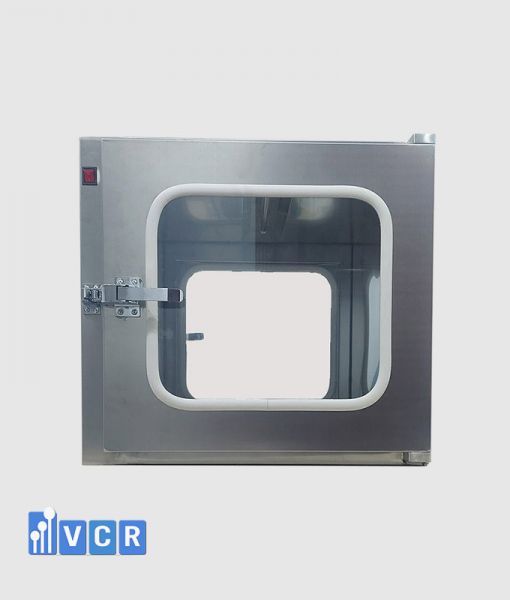
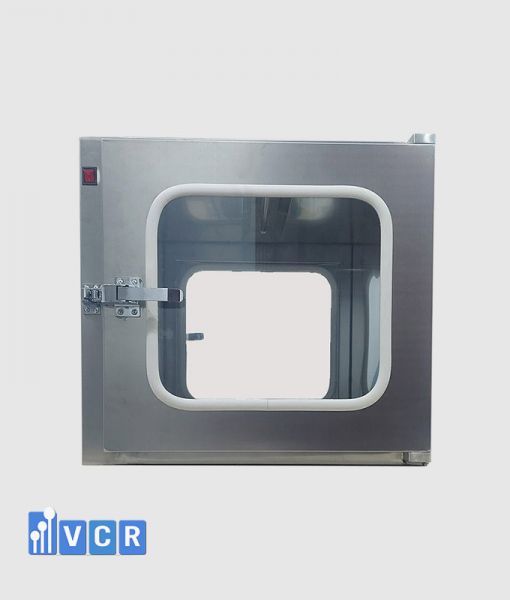
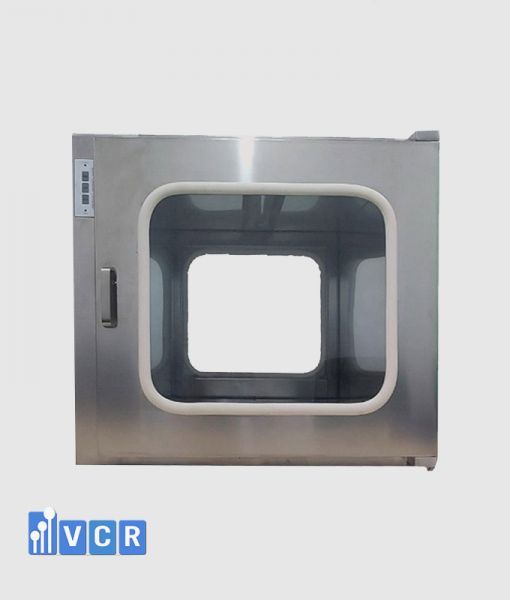
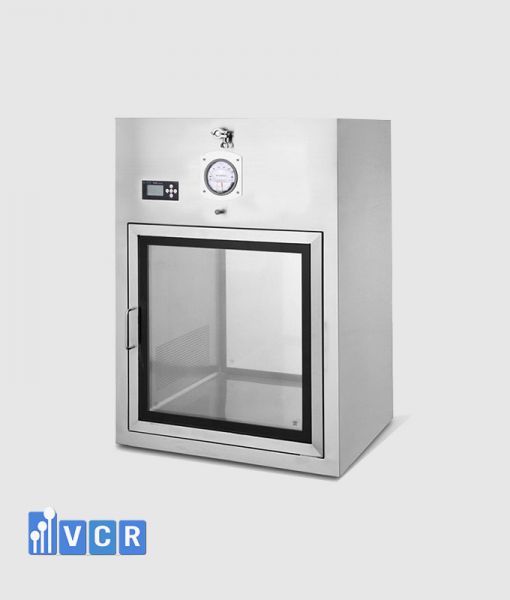
A Static Pass Box is a type of Pass Box that does not have a supply fan or an internal HEPA filtration system. It mainly serves as an interlocked transfer chamber for moving materials between two areas with similar cleanliness levels or where active air treatment inside the chamber is not required. A Static Pass Box usually has a simple structure, including a stainless-steel body, two doors, an interlocking system, sealing gaskets, viewing glass, and sometimes a UV lamp or internal light depending on project requirements. This type is suitable for controlled areas where a separate clean airflow inside the chamber is not necessary.
What is a Dynamic Pass Box?
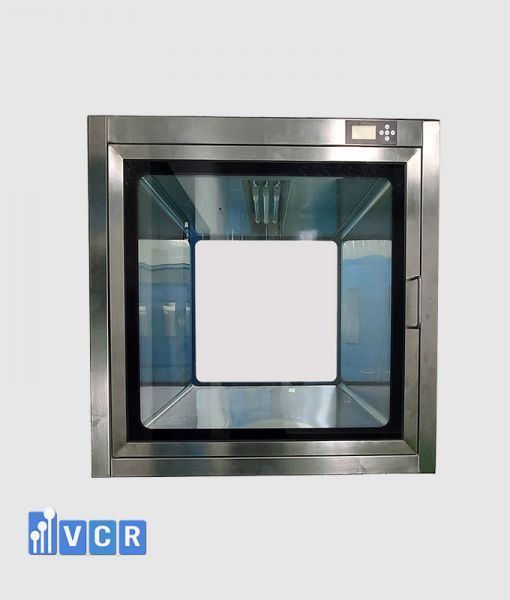
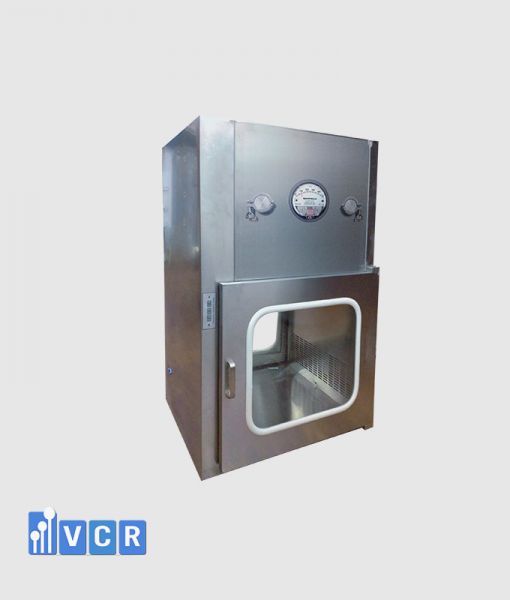
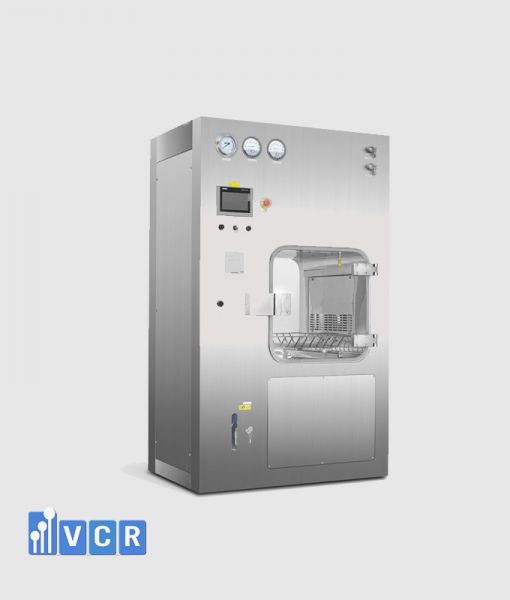
A Dynamic Pass Box is a type of Pass Box equipped with a fan, HEPA or ULPA filter, and a clean-air supply system inside the transfer chamber. During operation, it creates a filtered airflow through the chamber to reduce airborne particles and help maintain a cleaner environment during material transfer. A Dynamic Pass Box is commonly used when materials are transferred from a less clean area to a cleaner area, or when the receiving area requires stricter contamination control. In pharmaceutical and GMP cleanrooms, Dynamic Pass Boxes are often preferred for transferring materials into higher-grade production areas.
What is the difference between a Static Pass Box and a Dynamic Pass Box?
The main difference between a Static Pass Box and a Dynamic Pass Box is the air-treatment system. A Static Pass Box does not have a fan or HEPA filter, so it functions mainly as an interlocked transfer chamber to prevent direct door opening between two areas. A Dynamic Pass Box has a fan and HEPA or ULPA filter, allowing it to generate clean airflow and reduce particles inside the transfer chamber. Therefore, a Static Pass Box is usually suitable for basic controlled areas, while a Dynamic Pass Box is more appropriate when materials are transferred into a cleaner area or a GMP environment with stricter requirements.
When should a Static Pass Box be used in a cleanroom?
A Static Pass Box should be used when materials are transferred between two areas with similar cleanliness levels, or when the materials have already been cleaned, properly packaged, and do not require active air treatment inside the chamber. It is suitable for auxiliary transfer points, clean storage areas, clean corridors, or areas that are not highly sensitive to airborne particles. A Static Pass Box has the advantages of a simpler structure, lower investment cost, and easier maintenance. However, if materials are being transferred into a cleaner area or a sterile production zone, a Dynamic Pass Box should be considered for better control.
When should a Dynamic Pass Box be used instead of a Static Pass Box?
A Dynamic Pass Box should be used instead of a Static Pass Box when materials are transferred from a less clean area to a cleaner area, or when the process requires particle control inside the transfer chamber. It is suitable for pharmaceutical manufacturing, GMP cleanrooms, weighing rooms, preparation areas, clean packaging zones, QC laboratories, and areas where cross-contamination risk must be minimized. With a fan and HEPA filter, a Dynamic Pass Box supplies clean air into the chamber and helps reduce particles generated from packaging or transfer operations. If the product is sensitive to particles, microorganisms, or contamination, a Dynamic Pass Box is usually the safer choice.
Which type of Pass Box is suitable for the pharmaceutical industry?
The pharmaceutical industry should select a Pass Box based on the cleanliness grade of each area, the direction of material flow, cross-contamination risk, and GMP requirements of the process. For auxiliary areas or transfers between two zones with similar cleanliness levels, a Static Pass Box may be sufficient if the process is well controlled. For drug production areas, weighing rooms, preparation rooms, sterile areas, or higher-grade cleanrooms, a Dynamic Pass Box is often more suitable because it includes HEPA filtration and clean airflow. Other important factors include stainless-steel material, interlocking system, UV light, internal lighting, pressure gauge, cleanability, and validation requirements.
Is a Dynamic Pass Box suitable for GMP cleanrooms?
A Dynamic Pass Box is suitable for GMP cleanrooms when it is properly designed, installed, operated, and validated according to the facility’s requirements. It supports the control of materials entering clean areas, reduces the risk of cross-contamination, and helps maintain a more stable environment inside the transfer chamber. However, having a Dynamic Pass Box alone is not enough to meet GMP requirements if cleaning, operation, maintenance, filter replacement, and recordkeeping are not properly controlled. In GMP, the device must be supported by clear SOPs, usage records, periodic checks, and appropriate risk assessment.
Does a Pass Box need to comply with GMP?
A Pass Box used in pharmaceutical manufacturing should be suitable for GMP requirements in terms of hygienic design, cross-contamination control, contact materials, cleanability, and operational control. GMP does not evaluate only the equipment itself; it also considers how the equipment is integrated into material flow, room classification, operating procedures, and documentation. A GMP-suitable Pass Box typically requires easy-to-clean stainless-steel surfaces, rounded corners, sealing gaskets, an interlocking system, status indicators, and periodic inspection capability. For a Dynamic Pass Box, HEPA filtration, air velocity, pressure differential, and validation records are also important.
Does a Pass Box require IQ, OQ, and PQ validation?
In pharmaceutical facilities, a Pass Box often requires IQ, OQ, and sometimes PQ depending on the risk level of the device in the process. IQ confirms that the equipment has been installed according to the design, correct materials, required specifications, and approved location. OQ confirms that the equipment operates as intended, including interlock function, UV light, internal lighting, fan, pressure differential, air velocity, and alarms if available. PQ evaluates the equipment under actual operating conditions, especially in critical GMP areas or where the Pass Box directly affects cross-contamination control.
How does the interlock mechanism work in a Pass Box?
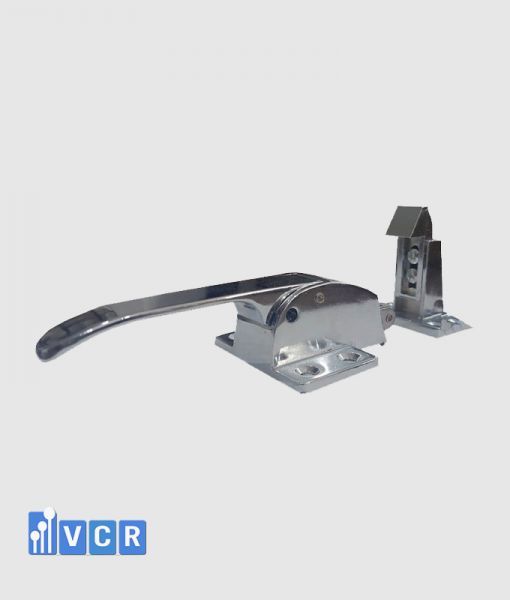
The interlock mechanism ensures that the two doors of a Pass Box cannot be opened at the same time. When one door is open or not fully closed, the other door remains locked to prevent air, dust, or contaminants from passing directly between the two areas. This mechanism may operate through a mechanical lock, electromagnetic lock, or electronic control system. In cleanrooms, interlocking is a critical function because it protects pressure differential, reduces cross-contamination, and maintains cleanroom zoning principles.
Why should the two doors of a Pass Box not be opened at the same time?
The two doors of a Pass Box should not be opened at the same time because doing so creates a direct opening between two areas, potentially disturbing pressure differential and increasing cross-contamination risk. When both doors are open, air from the less clean area may enter the cleaner area, carrying dust, microorganisms, or chemical vapors. In pharmaceutical manufacturing, this can affect the cleanroom’s controlled state and create deviation from SOPs. Therefore, interlocking is almost mandatory for Pass Boxes used in controlled cleanroom environments.
What is the difference between mechanical interlock and electronic interlock?
A mechanical interlock uses a physical mechanical mechanism to prevent both doors from opening at the same time. It is usually simple, easy to use, and less dependent on power supply. An electronic interlock uses electromagnetic locks, door sensors, and a control system to manage door status. It can be integrated with status lights, alarms, UV timers, or a monitoring system. Mechanical interlocks are suitable for basic applications, while electronic interlocks are more suitable for GMP environments that require clear status indication and better operational control.
What are the advantages of an electronic interlock compared with a mechanical interlock?
An electronic interlock provides more precise door-status control and can be integrated with indicator lights, buzzers, sensors, timers, and central control systems. In a Dynamic Pass Box, electronic interlocks often work well with fans, UV lamps, internal lighting, and delayed door-opening functions after a treatment cycle. In GMP facilities, an electronic interlock helps operators clearly recognize which door can be opened and reduces handling errors. However, it requires stable power supply, periodic maintenance, and routine functional checks to avoid operational failure.
Is a mechanical interlock suitable for GMP cleanrooms?
A mechanical interlock can be suitable for GMP cleanrooms if the application has low to moderate risk and the mechanism effectively prevents both doors from opening at the same time. Its advantages include simplicity, low dependence on electrical systems, and ease of use. However, for high-control areas requiring status indication, UV timing, alarm functions, or validation support, an electronic interlock is usually more appropriate. When using a mechanical interlock in GMP areas, the design should be easy to clean, durable, low-particle-generating, and checked periodically through SOPs.
What should be done when the Pass Box interlock fails?
When the Pass Box interlock fails, the equipment should be stopped from use or operated only under an approved temporary control procedure. Operators should notify QA, maintenance, or the cleanroom-responsible department to investigate the cause. Common causes include faulty door sensors, weak electromagnetic locks, power issues, misaligned doors, gasket obstruction, or jammed mechanical components. After repair, the interlock function must be rechecked, records must be completed, and the equipment should only be returned to service once it is confirmed to meet requirements.
Can a Pass Box interlock failure affect cleanroom pressure differential?
Yes. A Pass Box interlock failure can affect cleanroom pressure differential if both doors can be opened at the same time or if one door cannot close properly. In such cases, air may move uncontrollably between two areas, reducing the effectiveness of cleanroom zoning. In GMP areas, loss of pressure control may increase the risk of cross-contamination, dust transfer, or environmental deviation. Therefore, interlock failure should not be treated as a minor issue, especially when the Pass Box connects two areas with different cleanliness levels.
What should be done if one Pass Box door cannot lock?
If one Pass Box door cannot lock, the equipment should be temporarily stopped and inspected before further use. Possible causes include misaligned hinges, trapped gaskets, weak electromagnetic locks, sensors failing to detect the closed position, controller errors, or improper door closing. Continuing to use the device when one door cannot lock increases the risk of both doors being opened at once and causing cross-contamination. After troubleshooting, door closure, interlock function, status indicators, and maintenance records should be verified.
Does a Pass Box need audible alarms or status indicator lights?
A Pass Box should have status indicator lights, especially in GMP areas or locations with multiple operators. Indicator lights help users know which door is open, which door is locked, whether the fan is running, or whether the UV lamp is active. Audible alarms are useful when incorrect operation occurs, a door remains open too long, or an interlock fault is detected. Not every Pass Box requires an audible alarm, but clear status indication reduces handling errors and supports operational validation.
Does a Dynamic Pass Box require a fan and HEPA filter?
By definition, a Dynamic Pass Box has an active air-supply system, so it typically requires a fan and a HEPA or ULPA filter. The fan generates airflow through the filter, while the HEPA filter removes airborne particles from the air supplied into the chamber. If a Pass Box does not have a fan and filtration system, it is generally considered a Static Pass Box rather than a true Dynamic Pass Box. When selecting a Dynamic Pass Box, users should check airflow rate, air velocity, filter grade, filter pressure differential, and filter integrity-testing capability.
Can a Dynamic Pass Box create a clean environment inside the transfer chamber?
A Dynamic Pass Box can create a cleaner environment inside the transfer chamber through its fan and HEPA or ULPA filter. Air is drawn through the filter and supplied into the chamber, helping reduce particle concentration within the device. However, actual cleanliness depends on airflow design, filter condition, door tightness, pre-running time before opening, material condition, and operating practices. Therefore, a Dynamic Pass Box should be periodically checked through air-velocity measurement, filter inspection, and particle testing if required by the process.
Is HEPA H13 or H14 more suitable for a Dynamic Pass Box?
Both HEPA H13 and H14 filters may be suitable for Dynamic Pass Boxes depending on the required cleanliness level and risk level of the area. H13 is commonly suitable for many controlled cleanroom applications, while H14 offers higher filtration efficiency and may be preferred in stricter GMP environments. However, selecting H13 or H14 should not be based only on the idea that “higher filtration is always better.” Airflow rate, filter resistance, fan design, validation requirements, and replacement cost must also be considered. For critical areas, the filter grade should be defined in the URS or technical specification.
Can ULPA filters be used in a Dynamic Pass Box?
ULPA filters can be used in a Dynamic Pass Box if the area requires extremely strict particle control or has a higher internal standard. ULPA filters provide higher efficiency than HEPA filters for certain small particle ranges, but they usually have higher resistance and higher cost. If ULPA is used, the fan, filter housing, and airflow design must be capable of maintaining the required airflow. In many pharmaceutical applications, HEPA H13 or H14 is sufficient; ULPA is more suitable for special requirements or high-technology environments.
How often should the HEPA filter in a Dynamic Pass Box be replaced?
The HEPA filter replacement interval for a Dynamic Pass Box should not be determined only by a fixed number of months. It should be based on actual condition and periodic test results. Many facilities may set inspections every 6 or 12 months and replace the filter when pressure differential increases, airflow decreases, leak testing fails, or performance no longer meets requirements. Dusty environments, high usage frequency, or particle-generating materials can shorten filter life. In GMP facilities, filter replacement criteria should be defined in SOPs and supported by clear maintenance records.
How often should the HEPA filter in a Pass Box be changed?
For a Pass Box with HEPA filtration, especially a Dynamic Pass Box, the filter should be replaced when it no longer meets operational requirements rather than only according to nominal service life. Replacement signs include excessive filter pressure differential, insufficient air velocity, failed PAO/DOP test, moisture damage, physical deformation, filter tears, or suspected contamination. Many facilities perform annual assessment, but the interval may be shorter if the unit operates continuously. The key is to establish alert limits, action limits, and inspection records to support timely replacement.
What are the signs that a Pass Box HEPA filter needs replacement?
The most common sign is an abnormal increase in filter pressure differential, indicating that the filter may be clogged with dust. Other signs include reduced air velocity, unstable airflow, or particle test results inside the chamber not meeting requirements. If leak testing fails, the filter gasket is damaged, the frame is deformed, the filter is wet, moldy, or torn, it should be replaced immediately. In GMP environments, filter replacement should be proactive based on trend monitoring rather than waiting for serious failure.
Is PAO/DOP testing required for HEPA filters in Dynamic Pass Boxes?
Dynamic Pass Boxes using HEPA filters in critical GMP areas should usually undergo filter leak testing using a suitable method such as PAO or DOP testing as part of the facility’s validation program. The purpose is to confirm that the filter, gasket, and installation are free from leaks, preventing unfiltered air from entering the transfer chamber. Testing frequency depends on internal requirements, cleanliness grade, risk level, and validation policy. Even in lower-risk areas, the facility should establish an appropriate inspection plan rather than relying only on visual checks.
How often should HEPA filter performance in a Dynamic Pass Box be checked?
The HEPA filter condition and performance in a Dynamic Pass Box should be checked periodically, usually as part of the facility’s annual requalification or maintenance program. However, inspection frequency may be increased if the equipment is heavily used, the inlet environment is dusty, or the area has strict GMP requirements. In addition to leak testing, pressure differential, air velocity, fan condition, and door tightness should be monitored. After filter replacement, major repair, or equipment relocation, rechecking should be performed before the unit returns to service.
How does the UV lamp in a Pass Box work?
The UV lamp in a Pass Box usually uses ultraviolet light to help reduce microorganisms on material surfaces or inside the chamber over a defined exposure time. When UV is turned on, materials should be positioned so that as much surface as possible is directly exposed to the UV light and not blocked by packaging or stacking. UV does not penetrate deeply through materials and does not replace approved cleaning or decontamination procedures. In GMP environments, UV exposure time, usage frequency, and recording requirements should be clearly defined in the SOP.
Can the UV lamp in a Pass Box replace cleaning procedures?
No. The UV lamp cannot replace Pass Box cleaning procedures. UV only helps reduce microorganisms on surfaces directly exposed to the light, while dust, visible dirt, chemical residues, or organic contamination still need to be removed through proper wiping and cleaning methods. If the surface is dirty, UV effectiveness may be reduced because microorganisms or contaminants can be shielded. Therefore, a Pass Box still requires periodic cleaning using suitable wipes, approved disinfectants, and validated procedures.
How often should the UV lamp in a Pass Box be replaced?
The UV lamp in a Pass Box should be replaced according to the manufacturer’s recommended service life or when measured UV intensity no longer meets requirements. Many UV lamps may still appear visibly lit while their germicidal UV output has already decreased. Therefore, lamp condition should not be judged only by whether the lamp is still glowing. Facilities should track operating hours, replacement schedules, UV intensity checks if available, and maintenance records.
Is the UV lamp in a Pass Box safe for operators?
UV light can be harmful to the eyes and skin if operators are directly exposed. Therefore, a Pass Box with UV should have safety features, such as automatic UV shutoff when the door is opened or clear operating status warnings. Operators should not look directly at the UV lamp or place their hands inside the chamber while UV is on. SOPs must clearly define how to use UV, exposure time, door-closed conditions, and what to do if the UV lamp does not turn off properly.
Should the UV lamp be turned on when a Pass Box door is open?
No. The UV lamp should not be turned on when a Pass Box door is open because it may expose operators to harmful UV radiation and reduce process control. UV should operate inside a closed chamber to limit direct exposure and ensure a stable treatment cycle. In GMP Pass Boxes, an interlock or safety switch should turn off the UV lamp automatically when a door is opened. If the device does not have this function, strict SOP control and operator training are necessary.
How long should UV exposure in a Pass Box last?
UV exposure time in a Pass Box should be determined based on the intended use, material type, contamination risk, and validation or assessment results of the facility. Some sites may use cycles ranging from a few minutes to several tens of minutes, but the duration should not be applied arbitrarily without justification. UV effectiveness depends on lamp intensity, distance, surface exposure, shadowing, and the initial cleanliness of the material. Therefore, exposure time should be specified in the SOP and applied consistently.
Does a Pass Box need a UV timer?
A Pass Box with a UV lamp should have a timer or time display to control the exposure cycle consistently. Without a timer, operators may expose materials for too short or too long, causing process inconsistency. A timer also supports operation records and reduces dependence on manual handling. In GMP environments, this function is useful because it helps make the Pass Box operation repeatable and easier to inspect during audits.
Does a Pass Box need internal lighting?
A Pass Box should have internal lighting so operators can easily observe materials, chamber condition, and surface cleanliness. Internal lighting helps prevent forgotten items, detect visible dirt, and inspect packaging before transfer to the next area. In a Dynamic Pass Box, lighting also supports convenient operation while keeping the doors closed. The lighting should be suitable for cleanroom use, low heat, easy to clean, and low contamination risk.
Does a Pass Box need viewing glass?
Viewing glass allows operators to see the inside of the Pass Box without opening the door. This helps control operations, avoid opening the wrong door, and confirm whether materials have completed UV exposure or are ready for collection. In GMP areas, viewing glass also improves visibility and reduces procedural errors. The glass should be tightly installed, easy to clean, low-particle-generating, and compatible with cleanroom door design.
Does a Pass Box need a pressure differential gauge?
A Dynamic Pass Box should generally have a pressure differential gauge to monitor the condition of the HEPA filter and airflow inside the device. A rising pressure differential may indicate filter clogging, while abnormal readings may suggest fan failure, leakage, or incorrect filter installation. For Static Pass Boxes, a pressure gauge is not always necessary unless pressure monitoring between connected areas is required. In GMP facilities, required monitoring parameters should be defined in the URS and maintenance program.
Can a Pass Box connect to a BMS or EMS system?
Some Pass Boxes, especially Dynamic Pass Boxes with electronic interlocks and controllers, can be connected to a BMS or EMS if designed that way from the beginning. Connection allows monitoring of door status, fault alarms, fan operating time, UV status, or pressure differential if appropriate sensors are installed. This feature is useful for facilities requiring operating data, centralized alarms, and traceability. However, BMS/EMS integration must be specified in the technical requirements because not all standard Pass Boxes include this function.
Should a Pass Box have operation data recording?
A Pass Box with operation data recording is suitable for GMP facilities with high control requirements, where door status, UV time, door faults, or alarms need to be traceable. Operation data helps QA and maintenance teams monitor trends, detect incorrect operation, and assess SOP compliance. However, not every area requires this function because it increases equipment cost and data-management requirements. The choice should be based on risk assessment, audit expectations, and the criticality of the material transfer point.
Is stainless steel 304 or 316 more suitable for pharmaceutical Pass Boxes?
Stainless steel 304 is commonly used for cleanroom Pass Boxes because it offers good corrosion resistance, a clean appearance, and reasonable cost. Stainless steel 316 has higher corrosion resistance, especially in environments with chemicals, salts, or stricter cleaning requirements. For pharmaceutical applications, the choice between 304 and 316 should be based on the area of use, cleaning chemicals, product-contact risk, and internal standards. If the Pass Box is located in a high-requirement area or frequently exposed to strong chemicals, stainless steel 316 may be the better option.
How should the internal surface of a Pass Box be finished for easy cleaning?
The internal surface of a Pass Box should be smooth, low-gap, free from dead corners, and easy to wipe clean. Welds should be properly finished to minimize burrs, crevices, or dust-retention points. In GMP environments, the easier the surface is to clean, the lower the risk of dust, microbial, or chemical residue accumulation. In addition to stainless steel material, rounded corners, door gaskets, hinges, light positions, filter slots, and internal chamber details must also be considered.
Does a Pass Box need rounded internal corners?
A Pass Box used in the pharmaceutical industry should have rounded corners or a design that minimizes hard-to-clean right angles inside the working chamber. Sharp corners and narrow gaps can accumulate dust, chemical residues, or microorganisms, making routine cleaning more difficult. Rounded corners improve cleaning efficiency and align with GMP hygienic design principles. The degree of corner rounding should match the budget, cleanliness requirements, and technical standards of the project.
How should the size of a Pass Box be selected?
The size of a Pass Box should be selected based on the largest material to be transferred, frequency of use, handling process, and installation location. The chamber should not be too small, as this may cause materials to jam, make operation difficult, or require doors to remain open for too long. It should also not be unnecessarily large, as this increases cost, occupies more space, and may make airflow control more difficult. Width, height, depth, load capacity, trays, packaging, and cleanability should all be considered.
Can a trolley or large tray be transferred through a Pass Box?
A trolley or large tray can be transferred through a Pass Box if the device is designed as a floor-mounted or large-size Pass Box with suitable load capacity and dimensions. For heavy or bulky materials, the chamber floor strength, door height, hinge structure, and operating space on both sides must be checked. A small wall-mounted Pass Box should not be used for trolleys if it was not designed for that purpose. In GMP facilities, the types of materials allowed through each Pass Box should be clearly defined in SOPs to avoid misuse.
What is the difference between wall-mounted and floor-mounted Pass Boxes?
A wall-mounted Pass Box is typically installed through a cleanroom partition wall and is suitable for small to medium materials at a convenient handling height. A floor-mounted Pass Box is larger and used for heavy materials, trolleys, large containers, or production trays. The wall-mounted type saves space and suits many standard transfer points. The floor-mounted type requires stronger construction and may need larger doors, ramps, or load-bearing design.
Does a Pass Box need door sealing gaskets?
A Pass Box should have door sealing gaskets to reduce air leakage, prevent dust ingress, and support pressure control between areas. Gaskets also help doors close smoothly and improve chamber tightness. In a Dynamic Pass Box, door tightness is particularly important because it affects airflow and filtration efficiency inside the chamber. Gaskets should be inspected periodically because they may age, tear, flatten, or become contaminated over time.
What are the typical steps for transferring materials through a Pass Box?
A typical material transfer process begins with material inspection, removal of unsuitable outer packaging, and surface cleaning according to SOP. The operator opens the sending-side door, places the material inside the chamber, closes the door, and activates the required cycle such as UV exposure or fan operation if applicable. After the waiting time or treatment cycle is complete, the receiving-side operator opens the opposite door and removes the material. Throughout the process, both doors must not be opened at the same time, and records should be completed if required by the SOP.
What materials should not be transferred through a Pass Box?
Materials that generate excessive particles, untreated carton packaging, moldy items, leaking chemicals, materials with unknown cleanliness status, or objects not approved for cleanroom entry should not be transferred through a Pass Box. Oversized, overweight, or sharp-edged items should also not be transferred if the Pass Box is not designed for them. In pharmaceutical manufacturing, all materials passing through a Pass Box must comply with the approved material flow. If a material has high contamination risk, it should be cleaned, repackaged, or decontaminated before transfer.
Can carton boxes be transferred through a Pass Box into a cleanroom?
In general, carton boxes should not be transferred directly into cleanroom areas because carton is a particle-generating material and may carry contamination. If materials arrive in carton packaging, the outer packaging should be removed, wiped, or replaced with cleanroom-compatible packaging before entering the clean area. In GMP environments, materials should be packaged in low-particle, cleanroom-suitable materials. Bringing carton directly into a cleanroom without control can increase particle load and affect area cleanliness.
What cleaning chemicals should be used for a Pass Box?
Cleaning chemicals for a Pass Box should be compatible with stainless steel, the cleanliness grade, product type, and the facility’s cleaning program. Common options may include suitable diluted alcohol, approved disinfectants, or cleanroom-specific cleaning agents. Strongly corrosive chemicals, residue-forming agents, or chemicals incompatible with stainless steel and gaskets should not be used without assessment. In GMP environments, chemical type, concentration, contact time, wiping method, and cleaning frequency must be defined in the SOP.
What is the GMP-standard cleaning procedure for a Pass Box?
A GMP-standard Pass Box cleaning procedure should be written as a clear SOP, including preparation of tools, chemicals, wiping sequence, cleaning frequency, and recordkeeping. Operators should remove all materials from the chamber, inspect the surfaces, and wipe from cleaner areas to less clean areas, from top to bottom, and from inside to outside. Special attention should be paid to corners, door gaskets, handles, hinges, viewing glass, and the chamber floor. After cleaning, the chamber should be checked for dryness and cleanliness, doors should be properly closed, and records should be completed.
How often should a Pass Box be cleaned in a pharmaceutical facility?
The cleaning frequency of a Pass Box in a pharmaceutical facility depends on room grade, usage frequency, material type, and cross-contamination risk assessment. It may be cleaned per shift, daily, after each batch, after transferring high-risk materials, or according to an approved periodic schedule. In critical areas, cleaning frequency is usually stricter and must be fully documented. A facility should not apply the same cleaning frequency to every Pass Box if the risk level differs between locations.
What should be recorded in Pass Box cleaning and operation records?
Pass Box cleaning and operation records should include date and time of use, operator name, type of material transferred, equipment status, UV or fan cycle if applicable, cleaning status, and any abnormal events. For Dynamic Pass Boxes, records may also include filter pressure differential, fan status, air-velocity check results, or filter replacement date. Records help demonstrate that the equipment is operated according to SOP and support traceability during deviations. In GMP, records must be clear, timely, and easy to review during audits.
Does a Pass Box require periodic pressure differential checks?
A Dynamic Pass Box with a HEPA filter should have periodic pressure differential checks to assess filter condition and airflow. Excessive pressure differential may indicate filter blockage, while abnormally low pressure may indicate leakage, incorrect filter installation, or fan malfunction. For Static Pass Boxes, pressure differential checks may not always apply to the equipment itself, but the pressure differential between the two connected areas should still be considered. Inspection frequency should be defined in the maintenance and validation plan.
Does a Pass Box require leakage testing?
A Pass Box should be checked for tightness or leakage if it is installed between two areas with different pressure or cleanliness requirements. Leakage at doors, gaskets, joints, or wall penetration points can reduce cleanroom zoning effectiveness. In a Dynamic Pass Box, leakage can also affect chamber airflow and filtration performance. Tightness checks should be performed during installation, after major maintenance, after gasket replacement, or whenever pressure-control issues are suspected.
Does a Pass Box require air-velocity testing?
A Dynamic Pass Box requires air-velocity testing because air velocity reflects the ability of the unit to supply clean filtered air into the chamber. If air velocity is too low, chamber clean-up may be insufficient; if too high, it may create unnecessary turbulence or affect handling. Air-velocity testing is often part of OQ, periodic maintenance, or requalification. A Static Pass Box does not have a supply fan, so air-velocity testing inside the chamber is usually not required.
Does a Pass Box require particle testing?
A Pass Box, especially a Dynamic Pass Box used in a critical GMP area, may require particle testing inside the chamber or in related zones to confirm control effectiveness. Particle testing helps evaluate whether the filtration system, airflow, and operation meet cleanliness requirements. Testing frequency depends on room grade, risk assessment, and the facility’s environmental monitoring program. If the Pass Box is used only in a low-risk auxiliary area, particle testing may be simpler, but it should still be justified.
What are common mistakes when using a Pass Box?
Common mistakes include opening both doors nearly at the same time, failing to close doors properly, skipping the UV cycle, transferring uncleaned materials, leaving materials inside too long, or forgetting to complete records. Other errors include stacking materials in a way that blocks UV exposure, damaging gaskets, failing to clean after use, or using the Pass Box for unapproved materials. In Dynamic Pass Boxes, common mistakes also include ignoring pressure differential, not monitoring the HEPA filter, or operating the unit when the fan has failed. These errors should be controlled through training, clear SOPs, and periodic checks.
What technical specifications should be checked when purchasing a Pass Box?
When purchasing a Pass Box, important specifications include chamber size, stainless-steel material, material thickness, door type, interlock system, sealing gaskets, viewing glass, internal lighting, UV lamp, and cleanability. For a Dynamic Pass Box, additional specifications include HEPA or ULPA filter grade, filtration efficiency, airflow rate, air velocity, pressure differential, fan type, noise level, and filter-testing capability. For GMP use, technical documents, drawings, material certificates if required, operation manuals, and validation support documents should be requested. Selecting the right specifications from the beginning reduces the risk of costly modifications after installation.
Does a Pass Box need to match the room cleanliness grade?
A Pass Box should be selected according to the cleanliness grades and material-flow direction between the connected areas. If the Pass Box is installed between a lower-grade area and a higher-grade cleanroom, contamination risk should be carefully assessed and a Dynamic Pass Box may be required. If both areas have similar cleanliness levels, a Static Pass Box may be sufficient in many cases. The equipment should support the cleanroom zoning strategy and should not be selected separately from layout and workflow.
Does a Pass Box affect personnel flow in a cleanroom?
A Pass Box does not directly control personnel flow, but it helps reduce the need for operators to move between rooms just to transfer materials. When positioned correctly, it separates material flow from personnel flow, thereby reducing cross-contamination risk. In GMP facilities, this is very important because people are a major source of particles and microorganisms. A good design allows materials to follow a dedicated transfer route while personnel move through appropriate gowning and airlock routes.
Does a Pass Box affect material flow?
A Pass Box is an important part of cleanroom material flow. It helps define transfer points, operating sequences, waiting times, material cleaning steps, and responsibilities between two areas. If placed incorrectly, materials may move in a long route, cross personnel flow, or travel backward from a dirtier area into a cleaner area. Therefore, Pass Box location should be decided during layout design and operational risk assessment.
Does a Pass Box require an Air Shower for materials?
Some materials or high-requirement areas may need an air-blowing cleaning solution, but not every Pass Box requires a material Air Shower. A Dynamic Pass Box with HEPA and fan supplies clean air inside the chamber, but this is different from an Air Shower designed to blow particles off surfaces. If materials may carry many external particles, the facility may need wiping, outer packaging removal, repackaging, or a suitable cleaning device before transfer. Whether a material Air Shower is needed should be based on risk assessment and the actual material type.
What is the difference between a Pass Box and an Air Shower?
A Pass Box is used to transfer materials between two areas, while an Air Shower is mainly used to blow dust off personnel or materials before entering a cleanroom. A Pass Box has a transfer chamber and two interlocked doors, focusing on door control and material movement. An Air Shower uses high-velocity HEPA-filtered air to remove particles from surfaces. These two devices have different functions but can complement each other in a cleanroom contamination-control system.
What is the difference between a Pass Box and an Airlock?
A Pass Box is a material transfer device, usually smaller and not designed for personnel passage. An airlock is an intermediate room or zone used for personnel, materials, or equipment moving between areas with different cleanliness levels. An airlock may include pressure control, airflow control, waiting time, gowning, or decontamination steps. In GMP design, a Pass Box is suitable for small to medium materials, while an airlock is more appropriate for personnel, trolleys, large equipment, or complex movement flows.
Can a Pass Box be used in sterile areas?
A Pass Box can be used in sterile areas if it is designed and validated according to the control requirements of that area. In sterile areas, microbial and particle risks are usually higher, so a Dynamic Pass Box, interlock system, pressure control, decontamination procedure, waiting time, and environmental monitoring should be carefully considered. A standard Pass Box should not be used in a sterile area without proper assessment. Selection should be based on URS, risk analysis, and the facility’s GMP requirements.
Can a Pass Box be used in food cleanrooms?
A Pass Box can be used in food cleanrooms to transfer packaging, tools, test samples, or supplies between areas with different hygiene requirements. The goal is to reduce direct door opening and limit insects, dust, microorganisms, and contamination from outside. Depending on the control level required, a food facility may use a Static or Dynamic Pass Box. The equipment material should be easy to clean, corrosion-resistant, and compatible with the cleaning chemicals used in the plant.
Can a Pass Box be used in electronics cleanrooms?
A Pass Box is widely used in electronics cleanrooms, semiconductor facilities, microelectronics production, and high-tech manufacturing. In these industries, a Pass Box helps control particles, static electricity, packaging, and material flow into production areas. For ESD-sensitive components, the Pass Box should be combined with ESD-safe trays, gloves, packaging, and handling procedures. If the area requires high cleanliness, a Dynamic Pass Box or HEPA-filtered solution is more suitable.
Does a Pass Box need ESD protection?
A Pass Box may need ESD protection if it is used in electronics, semiconductor, or areas handling ESD-sensitive components. In the pharmaceutical industry, ESD is not usually the primary concern unless flammable solvents, sensitive powders, or specific safety requirements are involved. ESD control may involve surface materials, grounding, trays, gloves, and handling procedures. If the project has ESD risks, these requirements should be clearly defined in the URS.
Does a Dynamic Pass Box generate noise?
A Dynamic Pass Box may generate noise because of fan operation, but the noise level depends on fan type, airflow design, airflow rate, and installation quality. Excessive noise can disturb operators and may indicate a need to inspect the fan, vibration, or clogged filter. When purchasing the equipment, the noise level should be requested if the Pass Box is installed in an area where people work frequently. Periodic maintenance of the fan and filter helps the equipment operate more smoothly.
Does a Dynamic Pass Box consume much electricity?
A Dynamic Pass Box consumes more electricity than a Static Pass Box because it has a fan, lights, controller, electronic interlock, and possibly a UV lamp. However, its power consumption is generally not large compared with the cleanroom HVAC system. Electricity use depends on operating time, fan capacity, lighting type, and cycle settings. To save energy, the unit may operate on demand, through timers, or be switched off when not in use if allowed by SOP.
Should a Dynamic Pass Box run continuously?
Whether a Dynamic Pass Box should run continuously depends on cleanliness requirements, frequency of use, and the facility’s SOP. Continuous operation helps maintain a more stable clean state inside the chamber, but it increases electricity use and operating hours of the fan and filter. Cyclic operation may save energy but must ensure sufficient clean-up time before the receiving-side door is opened. In critical GMP areas, this decision should be based on risk assessment and operational qualification results.
Does a Pass Box require periodic maintenance?
A Pass Box requires periodic maintenance to ensure that doors close tightly, the interlock works correctly, UV output remains effective, the fan operates properly, and the HEPA filter does not degrade. Common maintenance items include checking hinges, handles, gaskets, locks, door sensors, controller, lamps, fan, pressure differential, and overall cleanliness. For Dynamic Pass Boxes, filter condition, air velocity, vibration, and noise should also be checked. Periodic maintenance helps detect problems early and prevent impact on cleanroom control.
What are common technical problems in Dynamic Pass Boxes?
Common technical problems in Dynamic Pass Boxes include fan failure, abnormal filter pressure differential, low air velocity, electronic interlock failure, UV lamp failure, and incorrect door-sensor signals. Some issues may be caused by power supply, controller faults, wiring, clogged filters, damaged gaskets, or operator misuse. If the unit produces unusual noise, strong vibration, or abnormal odor, it should be inspected immediately. In GMP environments, any technical issue affecting control functions should be recorded and handled through maintenance or deviation procedures.
Can operators repair a Pass Box by themselves?
Operators should not repair a Pass Box unless they are trained and authorized. Simple issues such as a door not being fully closed or material obstructing the door may be handled according to SOP. However, faults involving electronic locks, fans, HEPA filters, UV lamps, power supply, or controllers should be handled by maintenance personnel. After repair, functional checks and records should be completed before the equipment returns to operation.
Does a Pass Box require calibration?
Some components or measuring instruments on a Pass Box may require calibration, such as pressure differential gauges, pressure sensors, timers, or monitoring devices if they are used as GMP control references. The Pass Box body itself does not require calibration, but related indicators and instruments should be managed under the facility’s calibration program. If a gauge is for reference only, its role should be clearly defined in the equipment records. For critical GMP areas, calibration requirements should be identified from the URS stage.
Does a Pass Box need asset numbering and equipment management?
A Pass Box in a GMP facility should be assigned an equipment ID, location identity, and managed as part of the cleanroom equipment system. Equipment identification makes it easier to record cleaning, maintenance, validation, filter replacement, repair, and deviation tracking. If there are many Pass Boxes in a facility, clear numbering helps avoid confusion between areas with different requirements. Equipment records should include ID, location, Pass Box type, related cleanliness grade, installation date, and maintenance schedule.
Does a Pass Box need a separate SOP?
A Pass Box in a pharmaceutical facility should have a dedicated SOP or be included in SOPs for material control, cleanroom cleaning, and equipment operation. The SOP should describe who is allowed to use it, what materials may be transferred, door-opening sequence, UV exposure time, cleaning method, recordkeeping, and fault handling. For Dynamic Pass Boxes, the SOP should also include fan status, pressure differential, running time, and pre-use checks. A clear SOP reduces handling errors and improves consistency during audits.
What training do Pass Box operators need?
Operators need training on the purpose of the Pass Box, the rule of not opening both doors at the same time, material transfer procedures, cleaning procedures, UV use, and common fault handling. They should also understand that a Pass Box is a cross-contamination control point, not just a transfer window. For Dynamic Pass Boxes, training should include status lights, pressure differential, fan status, waiting time, and alarms. Training should be documented and refreshed periodically if the process changes.
How should the installation location of a Pass Box be determined?
The installation location of a Pass Box should be determined based on cleanroom layout, material flow direction, cleanliness grades on both sides, and cross-contamination control requirements. The Pass Box should be placed where it is convenient for operation but does not obstruct personnel flow, room doors, production equipment, or cleaning access. It should not be added randomly after layout completion because this may create an inefficient material flow. In GMP projects, the Pass Box location should be considered from the early design stage.
Does a Pass Box need to use the same material as cleanroom wall panels?
A Pass Box does not necessarily need to use the same material as the cleanroom wall panels, but it must be compatible in terms of tightness, durability, cleanability, and hygienic design. Pass Box bodies are commonly made of stainless steel, while cleanroom walls may be made of coated panels, stainless steel, or specialized materials. The key is that the wall penetration area must be sealed, free from gaps, dust-retention points, and easy to clean. The connection between the Pass Box and wall must be properly finished to preserve cleanroom zoning.
Does a Pass Box need explosion-proof design?
A Pass Box only needs explosion-proof design if it is used in an area with explosion risk, volatile solvents, combustible dust, or specific hazardous-area classification. For ordinary cleanroom areas, explosion-proof design may not be necessary. However, if a pharmaceutical process uses organic solvents or flammable materials, the risk should be assessed and suitable electrical components selected. This requirement should be defined by safety, engineering, and QA teams from the design stage.
Does a Pass Box need corrosion resistance?
A Pass Box should have corrosion resistance suitable for its operating environment and cleaning chemicals. Stainless steel 304 is suitable for many common applications, while stainless steel 316 may be better for areas using corrosive chemicals, strong disinfectants, or high-humidity conditions. In addition to the stainless-steel body, gaskets, glass, hinges, handles, and electrical parts should also be compatible with the cleaning chemicals used. Good corrosion resistance improves equipment durability, cleanability, and reduces particle generation from degraded surfaces.
Can a Pass Box be customized?
A Pass Box can be customized in terms of size, material, door type, interlock system, UV lamp, HEPA filtration, ULPA filtration, indicator lights, pressure gauge, BMS connection, or validation documentation. Customization is suitable for facilities with special layouts, large materials, or specific GMP workflows. However, all custom requirements should be clearly defined in the URS to avoid missing important functions after installation. Suppliers should advise based on cleanliness grade, material flow, cross-contamination risk, and long-term maintenance requirements.
Does a Pass Box need material certificates?
In GMP projects, a Pass Box may require material certificates if the facility or customer needs proof of stainless-steel grade, material origin, or suitability for the design. Material certificates are especially important when the equipment is installed in critical production areas or close to clean materials. In addition to material certificates, technical drawings, manuals, factory test reports, and validation support documents may also be required. Documentation requirements should be agreed upon before purchase.
Does a Pass Box require FAT and SAT?
A Pass Box may require FAT and SAT depending on project scale and GMP requirements. FAT, or Factory Acceptance Test, is performed at the supplier’s site before delivery and usually checks dimensions, materials, interlock function, lights, fan, filter, and surface finish. SAT, or Site Acceptance Test, is performed after installation at the facility to confirm that the equipment works properly under actual conditions. For Dynamic Pass Boxes or projects with strict validation requirements, FAT and SAT help reduce the risk of installation deviations.
Does a Pass Box need pre-use checks?
A Pass Box should be quickly checked before each use, especially in GMP areas. Operators should confirm that doors close properly, the chamber is clean, no materials remain inside, indicator lights are normal, the interlock is working, and no damage is visible. For Dynamic Pass Boxes, fan status, pressure differential, or pre-running time may also need to be checked before material transfer. Pre-use checks help detect problems early and prevent materials from passing through equipment that is not in a controlled state.
Should materials be cleaned before being placed into a Pass Box?
Materials usually need to be cleaned or stripped of outer packaging before being placed into a Pass Box, especially when transferred from a less clean area into a cleaner area. A Pass Box should not be considered a device that can “clean everything” from dirty materials. If materials carry dust, carton packaging, dirty wrapping, or unsuitable surfaces, contamination risk remains. Therefore, a proper procedure should define wiping, outer-layer removal, repackaging, or material inspection before transfer.
Can a Pass Box completely prevent cross-contamination?
A Pass Box helps reduce cross-contamination risk, but it cannot completely prevent contamination if design, operation, or cleaning is poor. Cross-contamination may arise from dirty materials, incorrect operation, improper door opening, interlock failure, damaged gaskets, or unsuitable cleaning procedures. Therefore, a Pass Box is only one control layer within a broader system of zoning, pressure control, HVAC, SOPs, training, and environmental monitoring. Effective cross-contamination control requires all these elements to work together.
Can a Pass Box change the cleanliness grade of a room?
A Pass Box does not change the cleanliness grade of the entire room, but it can affect the room’s ability to maintain its grade if it leaks, is operated incorrectly, or has faulty doors. A poorly located Pass Box or one without interlock can increase the risk of air from a less clean area entering a cleaner area. Conversely, a properly designed Pass Box supports cleanroom zoning and reduces disturbance during material transfer. Therefore, it should be considered part of the cleanroom control system, not an isolated device.
Can a Pass Box be used instead of a personnel door?
No. A Pass Box should not be used as a replacement for a personnel door or large equipment access unless it is specifically designed for that purpose. Pass Boxes are mainly for material transfer, not personnel movement. If trolleys, large equipment, or personnel must move between areas, an airlock, material airlock, or suitable cleanroom door should be used. Misusing a Pass Box may damage the equipment, disturb pressure control, and increase cross-contamination risk.
Can a Pass Box be used for laboratory sample transfer?
A Pass Box can be used to transfer test samples between production areas, sampling rooms, QC laboratories, or intermediate zones if the process allows it. Samples should be properly packaged, labeled, and controlled for cleanliness before transfer. If samples have biological, chemical, or cross-contamination risks, a specialized procedure may be required to ensure safety and containment. Sample transfer through a Pass Box should be defined in SOPs and sample traceability records.
What should be considered when using a Pass Box in a weighing area?
A Pass Box used in a weighing area must consider the risk of powder dust, cross-contamination, and cleaning after material transfer. If the weighing room handles active ingredients or dusty excipients, materials transferred through the Pass Box must be properly packaged and cleaned. The equipment should have easy-to-clean surfaces, reliable interlock, and may require Dynamic Pass Box design if transferring from a lower-grade area. SOPs should clearly define approved materials, cleaning frequency, and actions in case of spillage or contamination.
What should be considered when using a Pass Box in pharmaceutical packaging areas?
A Pass Box in a pharmaceutical packaging area is often used to transfer packaging materials, labels, tools, samples, or auxiliary supplies. Controls are needed to prevent material mix-up, cross-contamination between products, or entry of particle-generating packaging into clean areas. If labels or printed packaging materials are transferred, Pass Box use should be linked with line clearance and material identification procedures. The Pass Box should be cleaned regularly because packaging areas may generate paper dust, packaging fragments, or particles from handling.
What should be considered when using a Pass Box in a laboratory?
A Pass Box used in a laboratory helps transfer samples, tools, culture media, chemicals, or supplies between controlled areas. Chemical, microbiological, cross-contamination, and operator-safety risks should be assessed before use. If samples or chemicals have a risk of release, a standard Pass Box may not be sufficient and a specialized device may be required. The procedure should clearly define what materials may be transferred and how the chamber must be cleaned after each use.
Should a low-cost Pass Box be purchased?
A Pass Box should not be selected only because it is inexpensive if it does not meet cleanroom, GMP, and long-term operational requirements. A low-cost Pass Box may save initial investment but may create problems with tightness, interlock reliability, surface finish, stainless-steel quality, hinge durability, or validation support. In pharmaceutical facilities, the cost of deviations, repairs, or audit findings may be much higher than the initial savings. Equipment should be selected based on technical requirements, risk level, and total life-cycle cost.
What factors affect Pass Box price?
Pass Box price depends on whether it is Static or Dynamic, size, stainless-steel material, thickness, door type, interlock system, UV lamp, internal lighting, HEPA/ULPA filter, fan, pressure gauge, and customization level. GMP-related requirements such as rounded corners, high surface finish, validation documents, FAT/SAT, or BMS connection can also increase cost. Dynamic Pass Boxes usually cost more than Static Pass Boxes because they include filtration and a more complex control system. When comparing quotations, the technical configuration should be compared, not only the final price.
How should a Pass Box supplier be selected?
A Pass Box supplier should have cleanroom experience, understand GMP requirements, and be able to recommend the right equipment based on layout and material flow. The supplier should provide drawings, technical specifications, material information, operation manuals, test records, and after-sales support. For Dynamic Pass Boxes, service capability for filter inspection, filter replacement, fan maintenance, interlock troubleshooting, and validation support is important. A good supplier does not merely sell equipment; they help customers select the right solution for each cleanliness grade and operational risk.
Conclusion: Choosing the right Pass Box helps control cross-contamination and maintain stable cleanroom operation
A Pass Box may be a small device within a cleanroom system, but it plays a major role in controlling material flow, reducing direct door opening, and minimizing cross-contamination risk. A Static Pass Box is suitable for basic controlled areas or zones with similar cleanliness levels, while a Dynamic Pass Box is more suitable for areas requiring higher control, HEPA-filtered airflow, and cleaner transfer conditions inside the chamber.
For the pharmaceutical industry, Pass Box selection should be based on GMP requirements, cleanliness grade, product risk, material-flow direction, cleaning requirements, validation needs, and maintenance strategy. Even a well-built device can become a weak point if it is installed in the wrong location, operated incorrectly, or not cleaned regularly. Therefore, a Pass Box should be managed as part of the overall contamination-control strategy.
If your facility is building or upgrading cleanrooms for pharmaceuticals, food, electronics, semiconductors, or laboratories, choosing the right Pass Box from the beginning can reduce operational risks, support GMP audits, and maintain a more stable production environment. VCR Cleanroom Equipment can support the selection of Static Pass Boxes, Dynamic Pass Boxes, Air Showers, FFUs, HEPA/ULPA filters, cleanroom consumables, and cross-contamination control solutions suitable for each production area.
Dong Anh VCR