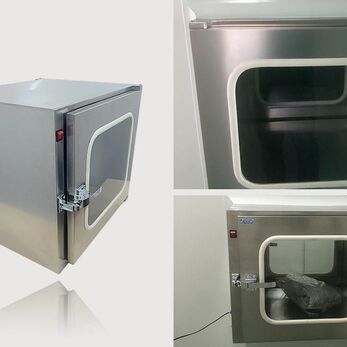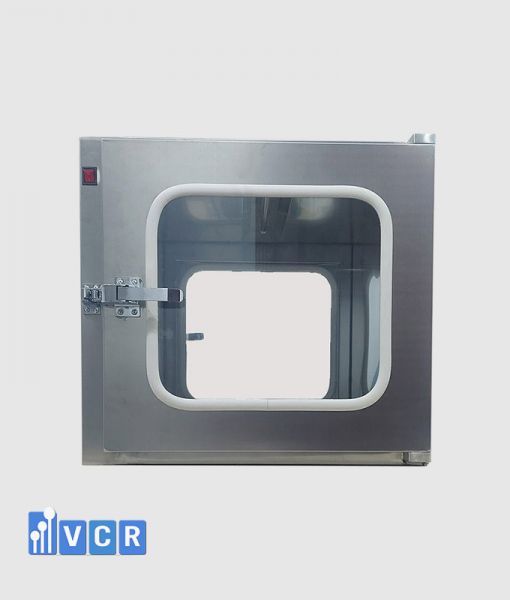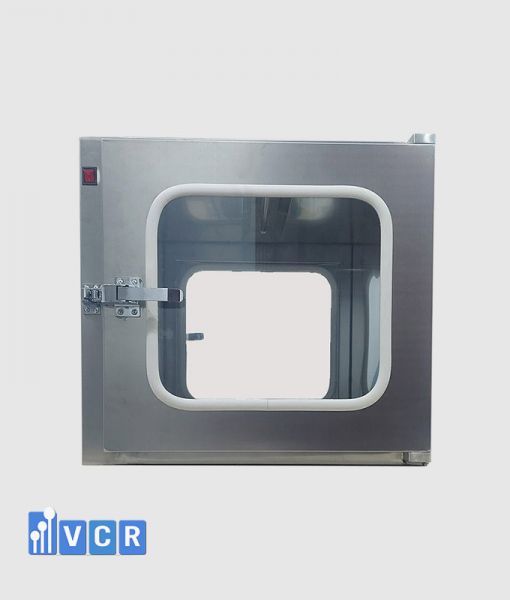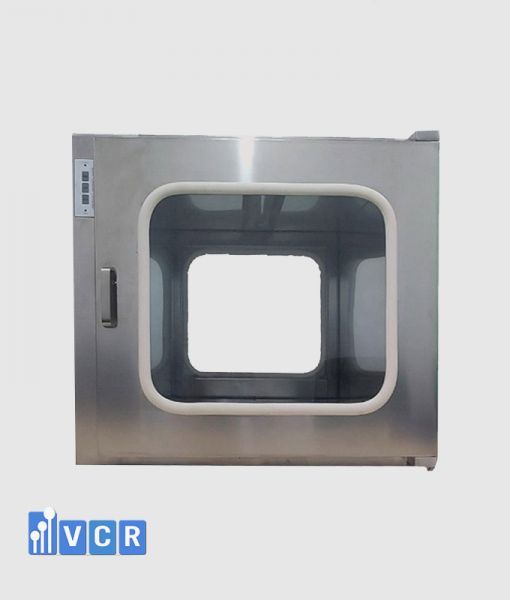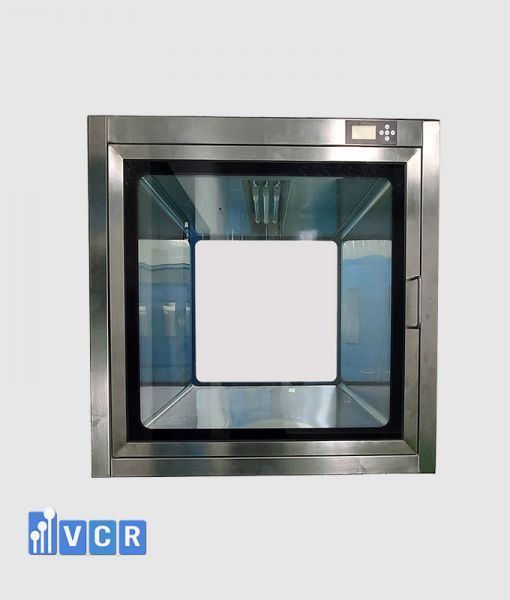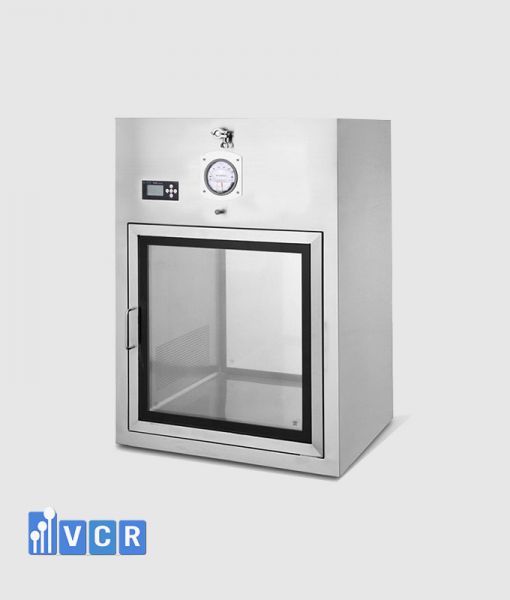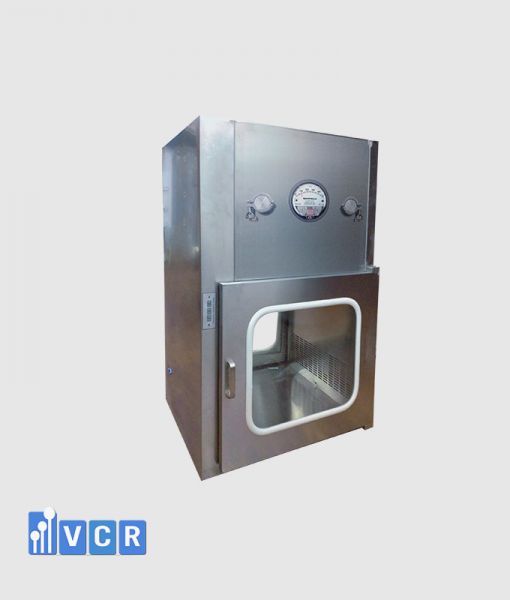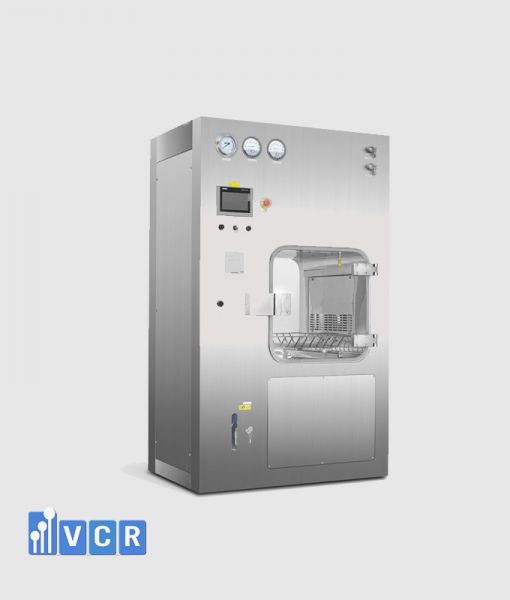

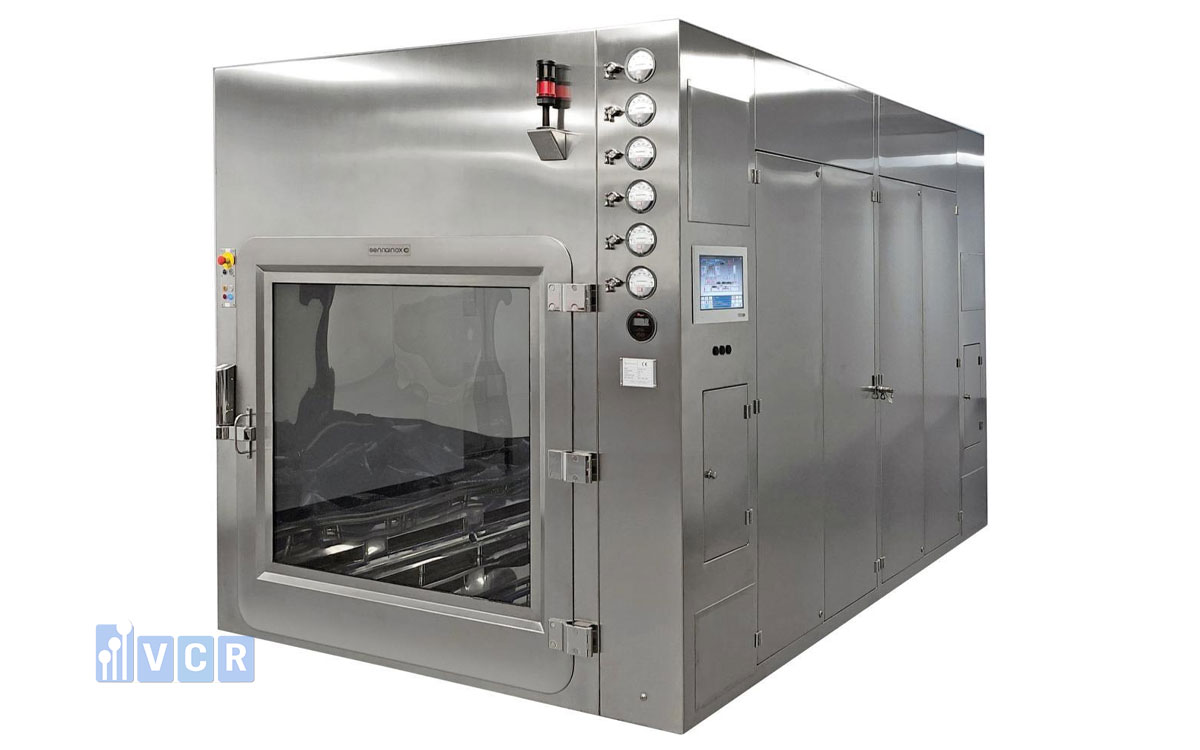
A VHP Pass Box is a cleanroom transfer device that uses vaporized hydrogen peroxide to disinfect materials before they enter controlled areas. With a sealed structure, interlocking doors, and an effective sterilization process, it helps reduce cross-contamination risks in pharmaceutical, biotechnology, and sterile manufacturing environments.
- What Is a VHP Pass Box?
- Why Do Cleanrooms Need a VHP Pass Box?
- What Is VHP in Cleanroom Decontamination Technology?
- How Is a VHP Pass Box Different From a Standard Pass Box?
- Basic Structure of a VHP Pass Box
- Operating Principle of a VHP Pass Box
- What Stages Does the VHP Decontamination Cycle in a Pass Box Include?
- Factors Affecting the Decontamination Effectiveness of a VHP Pass Box
- What Is a VHP Pass Box Commonly Used to Transfer?
- Applications of VHP Pass Box in GMP Pharmaceutical Cleanrooms
- Applications of VHP Pass Box in Biology, Microbiology, and Laboratories
- Applications of VHP Pass Box in Biopharmaceutical and Vaccine Production
- Can a VHP Pass Box Replace an Air Shower, Standard Pass Box, or Autoclave?
- When Should a VHP Pass Box Be Used?
- When Is a VHP Pass Box Not Necessarily Required?
- Important Technical Requirements When Selecting a VHP Pass Box
- Safety When Operating a VHP Pass Box
- What Should Be Checked During VHP Pass Box Qualification and Validation?
- Common Mistakes When Selecting and Using a VHP Pass Box
- Criteria for Selecting a Suitable VHP Pass Box for Cleanrooms
- FAQ – Frequently Asked Questions About VHP Pass Box
- Conclusion: A VHP Pass Box Is a Material Transfer and Surface Decontamination Solution for Cleanrooms Requiring High Microbiological Control
A VHP Pass Box is a cleanroom material transfer device integrated with vaporized hydrogen peroxide sterilization technology. This equipment helps reduce the risk of carrying microorganisms, spores, or contaminants from an external area into a cleaner area in pharmaceutical factories, biological facilities, laboratories, and GMP environments. Unlike a standard Pass Box, a VHP Pass Box does not only create a controlled transfer zone; it also supports surface decontamination of materials before they are brought into areas requiring strict microbiological control.
In cleanrooms, material transfer is always a sensitive point. Even when personnel, airflow, and production processes are controlled, materials brought in from outside may still carry dust, microorganisms, spores, or surface contamination. If doors are opened directly between two areas, the risk of cross-contamination and pressure disruption may increase. For this reason, a Pass Box is used as an intermediate device to limit simultaneous door opening and control the movement of materials between areas.
However, for environments requiring higher microbiological control, a standard Pass Box may not be sufficient. When materials need surface bioburden reduction before entering a clean area, a VHP Pass Box becomes a more specialized solution. This device uses VHP, or Vaporized Hydrogen Peroxide, to contact material surfaces inside a sealed chamber according to a controlled cycle. As a result, a VHP Pass Box can support contamination control strategies in sterile manufacturing, biopharmaceutical production, vaccine production, microbiology laboratories, and GMP environments with strict requirements.
What Is a VHP Pass Box?
A VHP Pass Box is a device used to transfer materials between two areas with different cleanliness grades or control levels, integrated with VHP decontamination technology. VHP stands for Vaporized Hydrogen Peroxide. It is a method used in controlled environments to reduce microorganisms, spores, and biological contaminants on material surfaces or inside a sealed volume.
In essence, a VHP Pass Box is still a type of Pass Box. It includes a transfer chamber, two doors on opposite sides, an interlock system, and space for placing materials. However, the key difference is that a VHP Pass Box includes a vaporized hydrogen peroxide supply system, vapor distribution system, cycle control, and an aeration or exhaust stage after decontamination. Therefore, the equipment does not only transfer materials but also supports surface treatment before materials enter a cleaner area.
In pharmaceutical factories, GMP cleanrooms, sterile areas, microbiology laboratories, or biological zones, materials cannot always be brought into a clean area through ordinary transfer alone. Packaging, bottles, tools, accessories, or consumables may carry microorganisms on their surfaces. If these materials are brought directly into an area requiring high microbiological control, contamination risk may increase. A VHP Pass Box helps reduce this risk by creating a decontamination cycle inside a sealed chamber before the clean-side door is opened.
It is important to understand that a VHP Pass Box is not suitable for every type of material and does not replace all sterilization procedures. The equipment focuses on surface decontamination using vaporized H₂O₂. Its effectiveness depends on the material type, load arrangement, exposure time, VHP concentration, chamber tightness, vapor distribution capability, and post-treatment aeration cycle. Therefore, when used in GMP environments or areas requiring strict microbiological control, a VHP Pass Box must be selected, operated, and validated according to the specific requirements of each project.
Why Do Cleanrooms Need a VHP Pass Box?
Cleanrooms need VHP Pass Boxes because the process of moving materials from an external area into a cleaner area always carries contamination risk. Materials, tools, packaging, samples, components, or small devices may carry dust, microorganisms, spores, or other contaminants on their surfaces. Even when materials appear visually clean, their surfaces may still contain microbial loads unsuitable for the receiving area.
A standard Pass Box helps limit direct door opening between two areas. It uses an interlock system to prevent both doors from opening at the same time, thereby reducing the risk of pressure disruption and uncontrolled airflow exchange. A Dynamic Pass Box may also include HEPA-filtered airflow to support particle control inside the transfer chamber. However, these solutions mainly focus on dust control, airflow control, and transfer behavior; they do not necessarily fully address microbial contamination on material surfaces.
In areas requiring strict microbiological control, especially sterile areas, biopharmaceutical areas, compounding areas, microbiology testing rooms, or production zones with high GMP requirements, surface microbial contamination becomes a more important concern. If materials with high microbial load are introduced into the clean area, they may become a source of secondary contamination. In such cases, a standard Pass Box alone may not be sufficient to meet the control objective.
A VHP Pass Box adds another control layer through a vaporized hydrogen peroxide decontamination cycle. Materials are placed inside the chamber, the doors are interlocked, VHP is introduced and distributed inside the chamber to contact material surfaces. After a suitable exposure time, the system performs aeration or exhaust to reduce residual H₂O₂ before the clean-side door is opened. As a result, materials passing through a VHP Pass Box are not only transferred through a controlled environment but are also surface-treated according to a validated cycle.
Therefore, a VHP Pass Box is particularly suitable when a facility needs to control microbial risk from incoming materials. It is not mandatory for every cleanroom, but it is highly important in areas where material transfer can directly affect the contamination control strategy.
What Is VHP in Cleanroom Decontamination Technology?
VHP stands for Vaporized Hydrogen Peroxide. In cleanroom decontamination technology, VHP uses H₂O₂ vapor to contact the surfaces of materials, equipment, or a sealed space to reduce microbial load, spores, and biological contaminants. Hydrogen peroxide is a strong oxidizing agent. When converted into vapor form and distributed within a sealed space, it can contact more surfaces than localized wiping or spraying.
The key point of VHP is that it is not the same as ordinary chemical spraying in an open space. A VHP cycle usually takes place inside a sealed chamber or controlled volume. H₂O₂ concentration, exposure time, humidity, temperature, chamber volume, vapor distribution, and aeration must be controlled. If any of these factors is not suitable, decontamination effectiveness may be reduced, or post-cycle chemical residue may exceed the desired level.
In a VHP Pass Box, vaporized hydrogen peroxide is introduced into the transfer chamber after materials are placed inside and the doors are locked. The VHP must be distributed to the material surfaces that need treatment. The system then maintains the required exposure time for decontamination to occur. At the end of the exposure phase, the chamber must be aerated or exhausted to reduce residual H₂O₂. Aeration means ventilating or purging the chamber after the cycle to bring residual vapor concentration down to a safe level before the door is opened.
VHP has the advantage of being suitable for many heat-sensitive materials compared with sterilization by saturated steam under pressure. However, not every material is compatible with vaporized H₂O₂. Some materials may absorb H₂O₂, be affected on the surface, change in properties, or retain residues for a longer time. Therefore, before applying a VHP Pass Box to a specific material group, the facility should evaluate material compatibility and develop an appropriate cycle.
In GMP environments, VHP should not be understood simply as “if H₂O₂ vapor is present, decontamination is achieved.” An effective VHP cycle must be designed, operated, and verified based on material load, material placement, microbiological criteria, exposure time, and the ability to remove residual vapor after the cycle.
How Is a VHP Pass Box Different From a Standard Pass Box?
A VHP Pass Box differs from a standard Pass Box in its purpose and microbiological control level. A standard Pass Box is mainly used to transfer materials between two areas, limit direct door opening, and reduce the risk of pressure disruption. It may be a Static Pass Box or a Dynamic Pass Box. A Static Pass Box is a passive transfer box without active clean airflow. A Dynamic Pass Box is an active transfer box, usually equipped with a HEPA filter and clean airflow inside the chamber.
A Static Pass Box is suitable for lower-risk transfer points where the main objective is to prevent two doors from opening at the same time and control material movement. A Dynamic Pass Box provides an upgrade with HEPA-filtered airflow, supporting particle control inside the transfer chamber. However, neither a Static Pass Box nor a Dynamic Pass Box automatically includes a vaporized hydrogen peroxide decontamination cycle.
A VHP Pass Box adds surface decontamination capability using VHP. When materials are placed inside the chamber, the equipment can run a cycle that introduces H₂O₂ vapor, maintains exposure time, and performs aeration after treatment. Therefore, a VHP Pass Box is not only a transfer device but also a surface treatment chamber before materials enter a cleaner area.
The most important difference is that a VHP Pass Box is suitable for areas with higher microbiological control requirements. If the goal is only to transfer materials between two areas with different cleanliness levels and low microbial risk, a standard Pass Box may be sufficient. If the goal is to reduce surface microbial load before materials enter a sterile area, biological zone, or GMP area with strict requirements, a VHP Pass Box is more suitable.
However, a VHP Pass Box is also more complex. It requires chamber tightness, a VHP cycle, an aeration system, H₂O₂ safety control, SOP, validation, and maintenance. Therefore, it should not be selected merely because it is a more advanced device. It should be selected according to the actual microbiological control needs and material transfer process of the facility.
Basic Structure of a VHP Pass Box
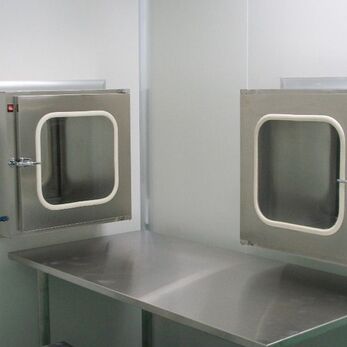
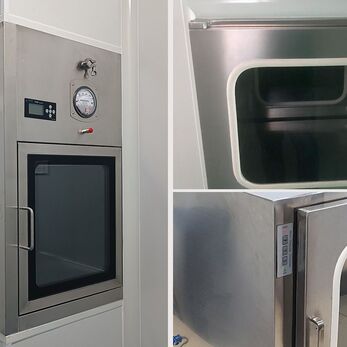
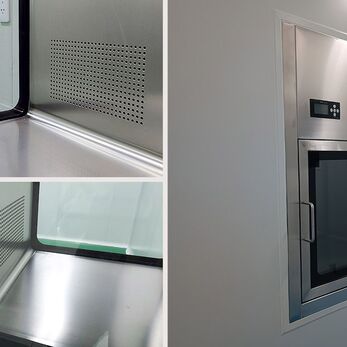
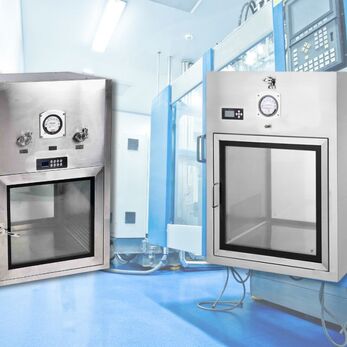
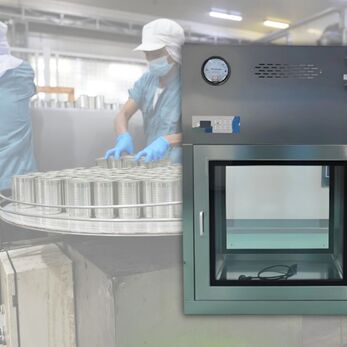
A VHP Pass Box has a more complex structure than a standard Pass Box because, in addition to material transfer, it must perform a decontamination cycle using vaporized hydrogen peroxide. The first component is the Pass Box chamber body. The chamber is usually made of cleanroom-compatible materials, with smooth, easy-to-clean surfaces and suitable corrosion resistance for the intended environment. For a VHP Pass Box, the chamber material must be compatible with vaporized H₂O₂.
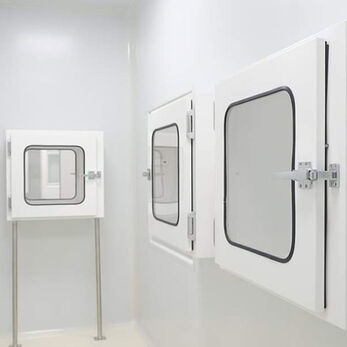
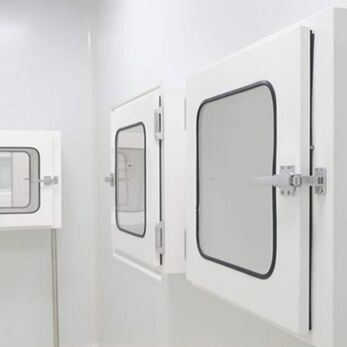
The device has two doors on opposite sides to connect two different areas. These doors are usually equipped with an interlock system. Interlock means a linked locking mechanism that prevents both doors from opening simultaneously. When one door is open, the other is locked. This mechanism limits direct air exchange between the two areas and helps maintain cleanroom pressure differentials.
A gasket is a sealing component, usually installed around the doors to improve chamber tightness. For a VHP Pass Box, tightness is extremely important because the decontamination cycle must take place in a controlled space. If the door or gasket is not tight, H₂O₂ vapor may leak outside, or the concentration inside the chamber may not meet requirements. This affects both decontamination effectiveness and operator safety.
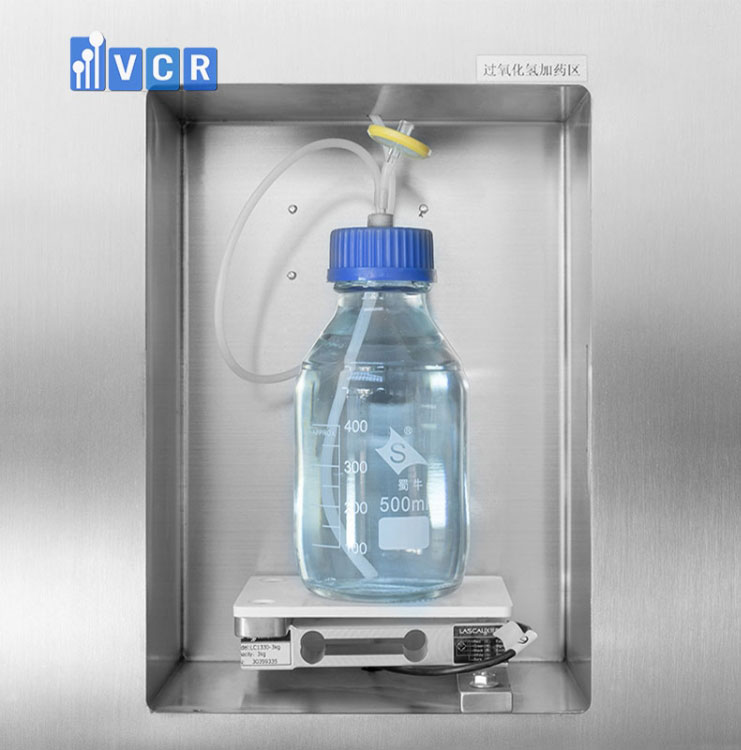
The VHP supply system is a defining component of the equipment. Depending on the design, VHP may be generated by an integrated module or connected to an external VHP source. Vaporized hydrogen peroxide is introduced into the chamber through an injection port or vapor distribution system. Some devices include a circulation fan to help distribute vapor more evenly inside the chamber. If vapor distribution is poor, some material surfaces may not receive sufficient exposure.
H₂O₂ concentration sensors may be integrated depending on the configuration. A sensor monitors chamber conditions or supports cycle control. Some systems may not continuously measure concentration in every configuration, but for high-requirement applications, monitoring H₂O₂ concentration and cycle parameters is very important.
A HEPA filter may be integrated into some VHP Pass Boxes, especially if the device needs particle control or uses clean air during the aeration phase. HEPA Filter means High Efficiency Particulate Air filter. In addition, the equipment may include an exhaust port or aeration system to remove residual H₂O₂ after the cycle. The control panel is where the operator selects cycles, monitors status, receives alarms, and confirms completion. Status indicators, safety alarms, trays, or material racks are also important components for stable operation.
Operating Principle of a VHP Pass Box
The operating principle of a VHP Pass Box is based on surface decontamination inside a sealed chamber using vaporized hydrogen peroxide. Instead of simply transferring materials from one side to the other like a standard Pass Box, a VHP Pass Box performs a controlled treatment cycle before the clean-side door is opened.
First, materials are loaded into the chamber from the external side or from the area with a lower control level. The operator must arrange the materials according to a defined procedure, avoiding excessive stacking or blocking surfaces that need decontamination. Once the materials are placed inside, the door is closed and the interlock system locks the chamber in a sealed condition.
Next, the VHP cycle begins. Vaporized hydrogen peroxide is introduced into the chamber through the VHP supply system. The vapor must be distributed throughout the chamber to contact material surfaces. Some devices use circulation fans or vapor distribution mechanisms to improve uniformity. During this stage, VHP concentration, exposure time, chamber tightness, and load characteristics all affect treatment effectiveness.
After VHP has been introduced and the required conditions are achieved, the system maintains the exposure time. This is the period during which H₂O₂ vapor acts on material surfaces. If the exposure time is too short or vapor does not contact surfaces sufficiently, decontamination may not be effective. Conversely, if the cycle is too long or materials are incompatible, issues such as residue, material impact, or prolonged operating time may occur.
When the exposure phase ends, the chamber enters the aeration or exhaust phase. The goal is to reduce residual H₂O₂ concentration inside the chamber to a safe level before the clean-side door is opened. This phase is critical because vaporized H₂O₂ is a chemical that must be controlled for operator safety. If the door is opened while concentration remains high, operators may be exposed.
After the system confirms that the cycle is complete and safe conditions are met, the clean-side door can be opened and the materials removed. The entire principle of a VHP Pass Box relies on three points: a sealed chamber, VHP contact with surfaces, and residual vapor removal before door opening. If any of these points is not controlled, the effectiveness or safety of the equipment may be affected.
What Stages Does the VHP Decontamination Cycle in a Pass Box Include?
The VHP decontamination cycle in a Pass Box may vary depending on the manufacturer, chamber volume, material type, microbiological requirement, and validation criteria. However, in general, a cycle usually includes preparation, condition stabilization, H₂O₂ vapor injection, exposure maintenance, aeration or exhaust, safety confirmation, and cycle completion.
The preparation stage begins before cycle initiation. The operator checks the chamber, materials, doors, gaskets, alarms, system condition, and readiness status. Materials must be arranged so that VHP can contact the surfaces requiring treatment. If materials are stacked too densely or surfaces are blocked, decontamination effectiveness may decrease.
Some systems include a condition stabilization or humidity adjustment phase. Chamber environmental conditions can affect H₂O₂ vaporization, distribution, condensation, and action. Depending on the equipment configuration, the cycle may control or monitor factors such as temperature, humidity, and chamber air circulation.
The H₂O₂ injection phase is when the device introduces VHP into the chamber. Vaporized hydrogen peroxide must spread throughout the chamber and contact material surfaces. If the chamber is overloaded or materials shield each other, vapor may not reach some surfaces. Therefore, material arrangement is an important part of the cycle.
The concentration maintenance and exposure time phase is the core stage of decontamination. Exposure time is the period during which VHP must be maintained to act on surfaces. This time must match the microbiological objective and the load type. The cycle should not be shortened arbitrarily just to increase throughput unless it has been evaluated and confirmed.
Then comes aeration, meaning ventilation or purging. The purpose of this stage is to reduce residual H₂O₂ concentration inside the chamber and on materials to an acceptable level before opening the door. This stage is directly related to operator safety and residue risk on materials. When the cycle is complete, the system allows the clean-side door to open according to the interlock condition and confirmed safe status.
Validation means confirming that the process meets requirements. In GMP environments, the VHP cycle must be validated for the material load and intended use. Therefore, a VHP Pass Box should not be understood as simply “turn on the machine and transfer materials.” It is a controlled decontamination process.
Factors Affecting the Decontamination Effectiveness of a VHP Pass Box
The decontamination effectiveness of a VHP Pass Box depends on many factors. The first factor is H₂O₂ concentration inside the chamber. If the concentration is too low, VHP may not be sufficient to achieve the microbial reduction objective. If the concentration is too high or poorly controlled, it may increase residue risk, affect materials, or create safety risks for operators.
The second factor is exposure time. Vaporized hydrogen peroxide needs sufficient time to act on material surfaces. If the cycle is shortened arbitrarily, decontamination effectiveness may not be assured. Conversely, an excessively long cycle may reduce transfer productivity and increase aeration time after treatment.
The third factor is temperature and humidity. Environmental conditions can affect H₂O₂ vaporization, distribution, condensation, and activity. Some VHP cycles need to control or at least monitor these conditions to ensure repeatability.
The fourth factor is chamber tightness. If the chamber is not tight, H₂O₂ vapor may leak out or the chamber concentration may not meet requirements. Leakage also creates operator safety risk. Therefore, door gaskets, chamber structure, interlock status, and closed-door condition must be checked periodically.
The fifth factor is vapor distribution. VHP is only effective on surfaces it can contact. If vapor distribution is uneven, areas with insufficient exposure may occur. Circulation fans, vapor injection points, exhaust locations, and chamber design all affect vapor distribution.
The sixth factor is material load and arrangement. If materials are stacked too densely, surfaces are blocked, or packaging is unsuitable, VHP may not contact all surfaces requiring treatment. Materials should be arranged according to a validated procedure, with suitable spacing and within the permitted load.
The final factor is material properties and initial contamination level. Some materials may absorb H₂O₂ or be affected by the chemical. If material surfaces are very dirty or contain heavy dust or organic matter, decontamination effectiveness may decrease. Therefore, a VHP Pass Box should be integrated into an overall material handling process, including cleaning, packaging, and load control before the cycle.
What Is a VHP Pass Box Commonly Used to Transfer?
A VHP Pass Box is commonly used to transfer materials that require surface microbial reduction before entering a cleaner area. Typical materials include clean tools, components, production accessories, trays, bottles, suitable packaging, consumables, small equipment, samples, or materials used in production and testing in controlled environments.
In pharmaceutical or biopharmaceutical facilities, a VHP Pass Box may be used to bring certain materials into areas requiring high microbiological control, especially when the materials are not suitable for moist heat sterilization or require surface treatment using vaporized H₂O₂ before entering the clean area. In laboratories, the device may support the transfer of tools, samples, or materials after they have been evaluated as suitable for the VHP cycle.
However, not every material is suitable for a VHP Pass Box. Before passing materials through the device, material compatibility with H₂O₂ must be evaluated. Some materials may discolor, become brittle, corrode, absorb vapor, or retain residues for a long time. Some packaging may prevent vapor from contacting the surface requiring treatment or retain H₂O₂ after the cycle.
It is necessary to distinguish surface decontamination from full product sterilization. A VHP Pass Box mainly treats material surfaces where vapor can make contact. If materials require deep internal sterilization, product sterilization, or moist heat treatment, an autoclave or another method may be more suitable. An autoclave is a device that sterilizes using saturated steam under pressure.
Load control inside the chamber is also important. If too many materials are placed in one cycle, VHP may not distribute evenly. If materials are stacked on top of one another, covered surfaces may not be adequately treated. Therefore, a VHP Pass Box must be accompanied by rules on permitted material types, arrangement method, maximum load, cycle selection, and post-treatment checks if required.
Applications of VHP Pass Box in GMP Pharmaceutical Cleanrooms
In GMP pharmaceutical cleanrooms, VHP Pass Boxes are used to support microbiological control when transferring materials into areas requiring higher cleanliness. GMP stands for Good Manufacturing Practice. In GMP, contamination control is not only about cleanroom design; it also includes how materials, personnel, equipment, and processes enter the production area.
A VHP Pass Box is especially suitable for sterile areas, compounding areas, sterile packaging areas, microbiology testing rooms, biopharmaceutical manufacturing areas, or areas with a strict contamination control strategy. A contamination control strategy should consider potential contamination sources entering the clean area, and materials are one important source.
When materials are brought from an external area into a cleaner area, their surfaces may carry microorganisms or spores. Without an appropriate treatment step, this risk may enter the production area together with the materials. A VHP Pass Box helps reduce that risk by decontaminating material surfaces inside a sealed chamber before the clean-side door is opened.
However, in GMP environments, having a VHP Pass Box does not mean all risks have been solved. The equipment must be integrated with cleaning procedures, material classification, packaging, SOP, validation, and operating records. It is necessary to define which materials are allowed through the VHP Pass Box, the maximum load, the arrangement method, the cycle used, and the acceptance criteria.
Operating records are also very important. The facility should record the cycle, operator, material type, equipment status, any alarms, and test results if required by the procedure. If the VHP Pass Box is used in a high-requirement area, cycle data and validation records are important evidence that the transfer process is controlled.
Applications of VHP Pass Box in Biology, Microbiology, and Laboratories
In biological, microbiological, and laboratory environments, a VHP Pass Box is used to support material transfer between areas with different control levels, especially when surface microbial reduction is needed before materials enter a clean area or sensitive operation area. These environments often involve samples, culture media, tools, small equipment, or consumables that must be controlled before entering the work area.
A VHP Pass Box may be used in microbiology laboratories, biological research areas, sample handling areas, cell culture rooms, or testing areas with high microbiological control requirements. When materials are placed inside the chamber, the VHP cycle treats surfaces in a sealed environment. This helps reduce the risk of bringing agents from the external area into the controlled area.
However, a VHP Pass Box does not replace a biological safety cabinet. A biological safety cabinet protects the operator, sample, and environment during direct work with biological agents. A VHP Pass Box only supports surface decontamination of materials inside a sealed chamber according to a validated cycle. These two devices have different purposes and may coexist in the same laboratory.
A VHP Pass Box also does not replace the entire biosafety process. Biosafety includes agent classification, PPE, operating procedures, waste handling, surface decontamination, personnel training, and incident response planning. A VHP Pass Box is only one supporting layer within that system.
One important point is that sample types, materials, and laboratory procedures may change over time. Therefore, the VHP cycle and the list of permitted materials should be reviewed periodically. If a new material type is introduced into the cycle, H₂O₂ compatibility, residue potential, and vapor contact effectiveness must be evaluated.
Applications of VHP Pass Box in Biopharmaceutical and Vaccine Production
In biopharmaceutical and vaccine production, a VHP Pass Box plays an important role because these processes are often sensitive to microbial contamination and require strict surface control for incoming materials. Materials entering clean areas may include bottles, tools, components, accessories, packaging, trays, or materials used for compounding and production. If material surfaces carry microorganisms, they may increase the risk to the production process.
Areas such as cell culture, sterile compounding, biopharmaceutical manufacturing, vaccine production, or post-sterilization operations often have strict microbiological control requirements. A VHP Pass Box provides a surface treatment step before materials enter such areas. The vaporized hydrogen peroxide cycle inside the sealed chamber can help reduce microbial load on suitable material surfaces.
In vaccine and biopharmaceutical production, material compatibility is as important as decontamination effectiveness. Some materials or packaging may absorb H₂O₂ or retain residues after the cycle. If the materials are directly related to the product, residue risk, product quality impact, or downstream process impact must be carefully evaluated.
A VHP Pass Box may be suitable for heat-sensitive materials, materials unsuitable for autoclaving, or materials requiring surface treatment rather than steam sterilization. However, it should not be viewed as an automatic replacement for all sterilization methods. Each material type must be assessed based on its material nature, required cleanliness level, microbiological objective, and suitable treatment method.
In biopharmaceutical production environments, VHP cycle validation is critical. The facility must demonstrate that the selected cycle is suitable for the real material load, real arrangement method, and microbiological control objective. If only a default cycle is used without evaluating actual load, effectiveness may be inconsistent.
Can a VHP Pass Box Replace an Air Shower, Standard Pass Box, or Autoclave?
A VHP Pass Box does not completely replace an Air Shower, standard Pass Box, or Autoclave because each device has a different purpose. An Air Shower is an air-blowing chamber typically used to remove dust from personnel or objects before entering a clean area. An Air Shower mainly removes external particles using high-velocity HEPA-filtered air. It is not a chemical surface decontamination solution.
A standard Pass Box is used to transfer materials between two areas, limit direct door opening, and help maintain pressure differentials. A Static Pass Box is suitable for basic material transfer. A Dynamic Pass Box may add HEPA-filtered clean airflow to control particles inside the chamber. However, a standard Pass Box does not have a VHP decontamination cycle.
An Autoclave sterilizes using saturated steam under pressure. It is suitable for many materials that can withstand heat and moisture and can provide deeper sterilization according to a validated cycle. However, not all materials can tolerate the heat and moisture of an autoclave. Some heat-sensitive items, electronics, packaging, or special materials may require another method.
A VHP Pass Box focuses on surface decontamination using H₂O₂ vapor inside a sealed chamber. It is suitable when materials need to be transferred into a clean area and surface bioburden must be reduced, especially when materials are not suitable for moist heat or require treatment using vaporized hydrogen peroxide. However, a VHP Pass Box does not necessarily sterilize the entire internal structure of materials or replace every other treatment procedure.
Therefore, the right question is not “Which equipment can a VHP Pass Box replace?” but “What treatment method does this material need before entering the clean area?” If the goal is to remove surface dust, an Air Shower may be suitable. If the goal is basic transfer, a standard Pass Box may be sufficient. If the goal is moist heat sterilization, an autoclave is appropriate. If the goal is surface decontamination using VHP in a sealed chamber, a VHP Pass Box should be considered.
When Should a VHP Pass Box Be Used?
A VHP Pass Box should be used when materials need to be transferred into a clean area with high microbiological control requirements and require surface bioburden reduction before entry. This is common in GMP pharmaceutical factories, sterile areas, biopharmaceutical and vaccine production, microbiology laboratories, and areas with strict contamination control strategies.
The first case is when materials are not suitable for moist heat sterilization but still need surface treatment. Some materials may be affected by the heat, moisture, or pressure of an autoclave. In such cases, VHP may be a more suitable surface decontamination method, provided that the material is compatible with H₂O₂.
The second case is when the facility needs to limit the risk of bringing microorganisms from external areas into a clean area. Packaging, tools, bottles, trays, components, or consumables may carry microorganisms on their surfaces. If the receiving area has high microbiological control requirements, a VHP Pass Box adds a control layer before the materials are introduced.
The third case is when the facility needs to limit direct door opening between two areas with different cleanliness grades or control levels. A VHP Pass Box still provides interlocking functionality like a Pass Box, while adding vaporized hydrogen peroxide treatment. This helps control both material transfer and surface microbial risk.
However, the decision to use a VHP Pass Box should be based on risk assessment. It is necessary to evaluate material type, microbiological requirement, material compatibility, usage frequency, cycle time, aeration capability, validation requirement, H₂O₂ safety, and operating procedure. The equipment should not be selected merely to visually upgrade the cleanroom.
When selected correctly, a VHP Pass Box helps the facility better control the process of introducing materials into clean areas. When selected incorrectly, it may increase cost, lengthen transfer time, and add operational requirements without providing proportional benefit.
When Is a VHP Pass Box Not Necessarily Required?
A VHP Pass Box is not mandatory for every cleanroom. If materials only need to be transferred between two low-risk areas, do not require VHP surface decontamination, or have already been treated by another suitable method, a standard Pass Box or Dynamic Pass Box may be sufficient.
For example, if materials have already been sterilized by autoclave, packed sterile, and introduced into the clean area through a well-controlled procedure, adding a VHP Pass Box may not be necessary. Similarly, if materials only require particle control and basic transfer, a Dynamic Pass Box with HEPA filtration may be more appropriate than a VHP Pass Box.
Another case is when materials are not compatible with H₂O₂. If a material absorbs too much hydrogen peroxide, retains residues for too long, or experiences property changes after the cycle, a VHP Pass Box may not be the right solution. In that case, other treatment methods such as disinfectant wiping, suitable packaging, autoclaving, or a dedicated process should be considered based on risk assessment.
Using a VHP Pass Box where it is not needed may increase investment cost, cycle time, validation requirements, maintenance, chemical safety requirements, and residual H₂O₂ control without providing proportional value. The device also requires operator training, a dedicated SOP, and periodic checks. If the area does not need this level of microbiological control, operating costs may not be justified.
Therefore, choosing a VHP Pass Box should be based on the real needs of the process. The suitable device is not the most complex one, but the one that solves the actual risk related to materials, the receiving area, and contamination control objectives.
Important Technical Requirements When Selecting a VHP Pass Box
The first requirement when selecting a VHP Pass Box is chamber material. The chamber should have smooth, easy-to-clean surfaces, limited crevices, and suitability for the cleanroom environment. The material must be compatible with vaporized hydrogen peroxide to avoid corrosion, degradation, or contamination. Corners, joints, and internal surfaces should be designed for cleanability and should not create accumulation points.
The second requirement is tightness. A VHP Pass Box must be tight enough to maintain H₂O₂ concentration inside the chamber and limit leakage into the surrounding environment. Door gaskets, door structure, interlock, and closing mechanisms all affect tightness. If the chamber is not tight, decontamination effectiveness may fail and operator safety may be affected.
The third requirement is the VHP supply and distribution system. Vaporized hydrogen peroxide must be introduced into the chamber in a suitable configuration and distributed evenly around the materials. If vapor is concentrated in one area, other surfaces may not be adequately treated. Circulation fans, vapor injection points, exhaust locations, and chamber geometry all affect distribution.
The fourth requirement is the exhaust or aeration system. After decontamination, residual H₂O₂ concentration must be reduced to a safe level before doors are opened. Therefore, the device must have a suitable aeration method. If the exhaust system connects to a gas treatment system, compatibility with layout and project safety requirements must be checked.
The fifth requirement is sensors, alarms, and control panel. If the equipment includes H₂O₂ concentration sensors, door sensors, leakage alarms, cycle alarms, and data recording, process control becomes stronger. The control panel should be easy to use, display clear status, and prevent operators from opening doors when the cycle is not safe.
The sixth requirement is chamber size and material load. The chamber must be large enough for the real materials to be transferred, but it should not be unnecessarily oversized because chamber volume affects cycle time and chemical consumption. Load size, material arrangement, frequency of use, and transfer time requirements must be defined.
The final requirement is validation capability. A VHP Pass Box must allow cycle confirmation with real loads, including vapor distribution checks, exposure time, residual H₂O₂, biological indicators if required by the project, and operating records. In GMP environments, validation capability is just as important as mechanical specifications.
Safety When Operating a VHP Pass Box
Safety is mandatory when operating a VHP Pass Box because the equipment uses vaporized hydrogen peroxide. H₂O₂ vapor is a strong oxidizing agent and must be controlled to avoid operator exposure. Therefore, a VHP Pass Box should not be operated like a standard Pass Box; it must follow SOPs and chemical safety requirements.
The first principle is not to open the door before the cycle is complete or before residual H₂O₂ concentration reaches a safe level. The interlock system and status alarms should prevent incorrect door opening. If an operator opens the door too early, H₂O₂ vapor may escape into the surrounding area and create respiratory, irritation, or chemical exposure risks.
The second principle is leakage control. Door gaskets, chamber structure, VHP supply lines, and exhaust lines must be checked periodically. If there is odor, an alarm, or suspected leakage, operation should be stopped according to SOP and the issue handled before continued use. Abnormal signs should not be ignored because even small leaks may affect safety and cycle performance.
The third principle is residual H₂O₂ control. After the VHP cycle, both the chamber and materials may retain hydrogen peroxide residues. The aeration stage must be sufficient to reduce residual concentration to an acceptable level. For materials capable of absorbing H₂O₂, more careful evaluation is required to avoid prolonged residue.
PPE stands for Personal Protective Equipment. When handling chemicals, replacing solution, maintaining the VHP supply system, or responding to incidents, operators may need suitable PPE such as gloves, safety goggles, masks, or respiratory protection according to risk assessment. PPE does not replace safe design, but it is a necessary protection layer.
Operator training is also very important. Operators must understand what VHP is, how the cycle works, when doors may be opened, how to recognize alarms, how to handle incidents, and how to complete records. A good device can still create risk if operators do not understand H₂O₂ hazards.
What Should Be Checked During VHP Pass Box Qualification and Validation?
VHP Pass Box qualification and validation should cover mechanical components, controls, safety, VHP cycle, and treatment effectiveness for the intended use. This is not a device that only requires checking door operation and chamber size. Because a VHP Pass Box involves chemical vapor decontamination, cycle confirmation is very important.
First, appearance, material, dimensions, and installation location should be checked. The chamber must match the required configuration, have suitable surfaces, show no deformation, operate doors smoothly, and be installed in a location convenient for use. The two doors must work correctly with the interlock system and prevent simultaneous opening if required by design.
Next, chamber tightness should be checked. Door gaskets, chamber structure, VHP injection points, and exhaust connections should be inspected to limit leakage. If the chamber is not tight, VHP concentration during the cycle may not be achieved, and H₂O₂ vapor may escape. This affects both decontamination effectiveness and safety.
The VHP supply system, vapor distribution, circulation fan, sensors if any, control panel, alarms, and exhaust/aeration system must be checked. The equipment must run the correct cycle, display clear status, alarm during abnormalities, and prevent door opening before safe conditions are reached.
Validation means confirming that the process meets requirements. During validation, the VHP cycle must be confirmed as suitable for the real material load. This may include load testing, checking hard-to-reach locations, monitoring concentration or cycle conditions, checking residual H₂O₂ after aeration, and using biological indicators if required by the project. A biological indicator is often used to assess decontamination effectiveness in certain processes.
An important point is that the validation cycle must reflect actual use. If the facility validates with a small load but later operates with much denser loads, the validation result may no longer be representative. If material type, load arrangement, or operating cycle changes, the impact must be reassessed.
Qualification and validation records must be retained. These records include equipment specifications, drawings, inspection results, cycle settings, operating data, test results, deviations if any, and corrective actions. In GMP environments, these documents are important evidence for audits, operation, and future change control.
Common Mistakes When Selecting and Using a VHP Pass Box
The first mistake is thinking that a VHP Pass Box can replace all sterilization methods. In reality, a VHP Pass Box mainly supports surface decontamination of materials using H₂O₂ vapor inside a sealed chamber. It does not automatically replace an autoclave, does not sterilize all material types, and cannot treat surfaces that vapor cannot contact.
The second mistake is failing to evaluate material compatibility. Some materials may be affected by H₂O₂ or retain residues for a long time after the cycle. Without prior evaluation, materials may be damaged, altered, or carry unwanted residues into the clean area.
The third mistake is overloading the chamber. VHP is only effective when vapor can contact the surface requiring treatment. If materials are stacked, surfaces are shielded, or the load exceeds validated conditions, decontamination effectiveness may decrease.
The fourth mistake is not controlling residual H₂O₂. After the cycle, if aeration is insufficient or materials absorb H₂O₂, residues may affect operator safety or downstream processes. This issue should not be taken lightly.
The fifth mistake is not validating the cycle. Using a default cycle without confirmation against the real load may create a false sense of safety. In GMP environments or high microbiological control areas, validation is important to prove that the cycle is suitable.
The sixth mistake is selecting a chamber that is too small. If the chamber cannot accommodate real material loads, operators may stack materials too densely or split them into too many cycles. This affects both decontamination effectiveness and operational productivity.
The seventh mistake is ignoring exhaust systems and chemical safety. A VHP Pass Box needs a method to reduce residual H₂O₂ concentration. If the exhaust or aeration system is unsuitable, exposure risk may increase.
The final mistake is lacking SOP, training, and maintenance. A VHP Pass Box is not a standard Pass Box with an added decontamination button. It is a device that requires cycle control, chemical safety control, sensors, gaskets, VHP supply systems, and operating records.
Criteria for Selecting a Suitable VHP Pass Box for Cleanrooms
The first criterion for selecting a suitable VHP Pass Box is the cleanliness grade and control level of the two connected areas. Which area is the equipment installed between? What is the cleanliness difference? Does the receiving area require strict microbiological control? These questions help determine whether a VHP Pass Box is necessary.
The second criterion is the type of materials being transferred. Are the materials tools, packaging, bottles, trays, components, samples, or small equipment? What are their size, shape, weight, and material? Are they compatible with vaporized H₂O₂? Is there a risk of absorption or residual retention? Without clear answers, it is easy to select the wrong equipment configuration.
The third criterion is the microbiological requirement. What level of microbial reduction does the facility need? Is validation required? Will biological indicators be used? The VHP cycle must be built around the microbiological objective, not only the desired operating time.
The fourth criterion is chamber size and load. The chamber must be large enough for the actual load but should not be unnecessarily oversized. Usage frequency, number of materials per cycle, load arrangement, and cycle time all affect equipment productivity.
The fifth criterion is the VHP cycle and aeration time. A device may have an effective decontamination cycle, but if aeration takes too long, workflow may be affected. Conversely, if aeration is too short, residual H₂O₂ risk may increase. A balance is needed between decontamination effectiveness, safety, and productivity.
The sixth criterion is safety and system integration. The equipment needs interlock, status alarms, leakage control, exhaust methods, a clear control panel, and appropriate operating SOPs. If the project requires connection to a gas treatment or exhaust system, this must be considered from the design stage.
The final criterion is validation, maintenance, and life-cycle budget. A VHP Pass Box does not only involve equipment purchase cost. It also involves chemical cost, inspection, sensors, gaskets, maintenance, training, and validation. As a cleanroom equipment supplier for cleanroom contractors, VCR Cleanroom Equipment can support consultation on selecting a VHP Pass Box suitable for the layout, cleanliness grade, material transfer process, GMP requirements, and qualification criteria of each project.
FAQ – Frequently Asked Questions About VHP Pass Box
Question: What is a VHP Pass Box?
A VHP Pass Box is a cleanroom material transfer device integrated with vaporized hydrogen peroxide decontamination technology. It helps reduce surface microbial load on materials before they enter a cleaner area.
Question: What is VHP?
VHP stands for Vaporized Hydrogen Peroxide. It is a method that uses H₂O₂ vapor for surface decontamination inside a sealed chamber or controlled environment.
Question: What is a VHP Pass Box used for?
A VHP Pass Box is used to transfer and surface-decontaminate materials, tools, packaging, or small equipment before they enter a clean area requiring high microbiological control.
Question: How is a VHP Pass Box different from a standard Pass Box?
A standard Pass Box mainly transfers materials and limits direct door opening between two areas. A VHP Pass Box adds a hydrogen peroxide vapor cycle to treat material surfaces.
Question: Can a VHP Pass Box replace an Autoclave?
Not completely. An autoclave sterilizes using saturated steam under pressure and is suitable for heat- and moisture-resistant materials. A VHP Pass Box mainly provides surface decontamination using vaporized H₂O₂ and is suitable for materials compatible with VHP.
Question: Can a VHP Pass Box be used in GMP cleanrooms?
Yes. A VHP Pass Box is commonly used in GMP cleanrooms, especially in sterile areas, pharmaceutical manufacturing, biopharmaceutical facilities, vaccine production, microbiology laboratories, or areas requiring high microbiological control.
Question: Does a VHP Pass Box need HEPA filtration?
It depends on the configuration and project requirements. Some VHP Pass Boxes include HEPA filtration to support particle control or clean air supply during aeration, but this requirement should be defined according to the process and qualification criteria.
Question: What materials are suitable for a VHP Pass Box?
Suitable materials often include tools, packaging, bottles, trays, components, consumables, or small equipment with surfaces requiring decontamination and compatibility with vaporized H₂O₂.
Question: Is a VHP Pass Box safe?
A VHP Pass Box is safe when properly designed, operated according to SOP, equipped with interlocks, alarms, residual H₂O₂ control, suitable aeration, and trained operators.
Question: Does a VHP Pass Box require validation?
Yes, especially in GMP environments or areas requiring strict microbiological control. Validation confirms that the VHP cycle is suitable for the material load, arrangement, and microbiological objective.
Question: Is aeration needed after a VHP cycle?
Yes. After the VHP cycle, aeration is required to reduce residual H₂O₂ concentration before the door is opened and materials are removed.
Question: When should a VHP Pass Box be selected instead of a Dynamic Pass Box?
A VHP Pass Box should be selected when materials need VHP surface decontamination before entering a clean area with high microbiological control requirements. If only particle control and basic transfer are needed, a Dynamic Pass Box may be sufficient.
Conclusion: A VHP Pass Box Is a Material Transfer and Surface Decontamination Solution for Cleanrooms Requiring High Microbiological Control
A VHP Pass Box is an important device in cleanrooms requiring high microbiological control, especially when materials need surface decontamination before entering a cleaner area. The equipment combines the transfer function of a Pass Box with a vaporized hydrogen peroxide decontamination cycle inside a sealed chamber.
A VHP Pass Box does not replace every sterilization method and is not suitable for every type of material. However, when selected correctly according to material type, microbiological requirements, material compatibility, VHP cycle, and validation criteria, it can help reduce the risk of introducing microorganisms into the clean area through materials.
For a VHP Pass Box to perform effectively, factors such as chamber tightness, vapor distribution, H₂O₂ concentration, exposure time, aeration, residual control, operator safety, SOP, and operating records must be well controlled. In GMP environments, the equipment must not only meet mechanical requirements but also demonstrate that the decontamination cycle is suitable for its actual intended use.