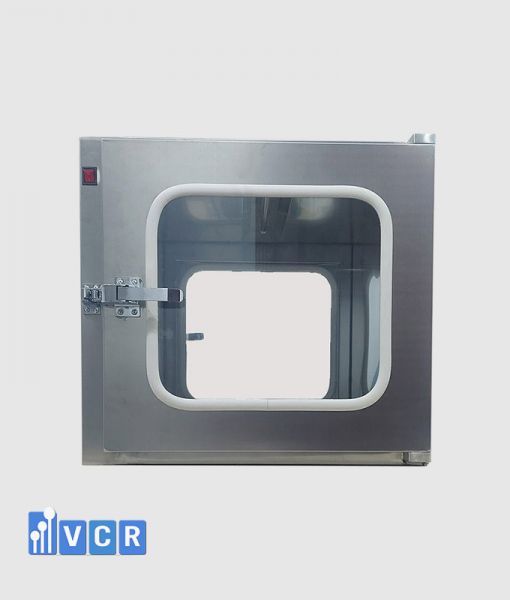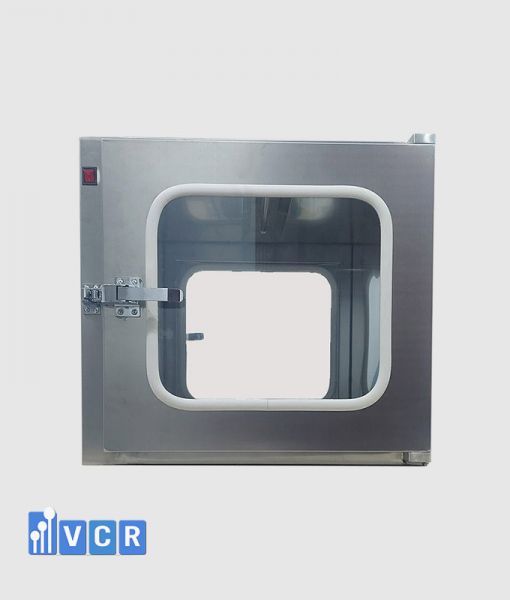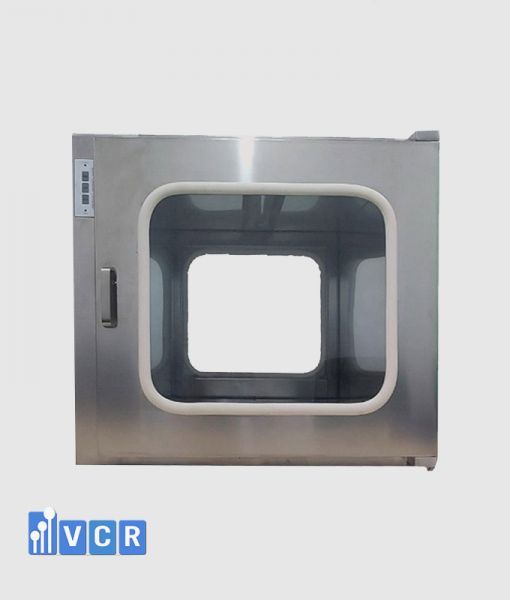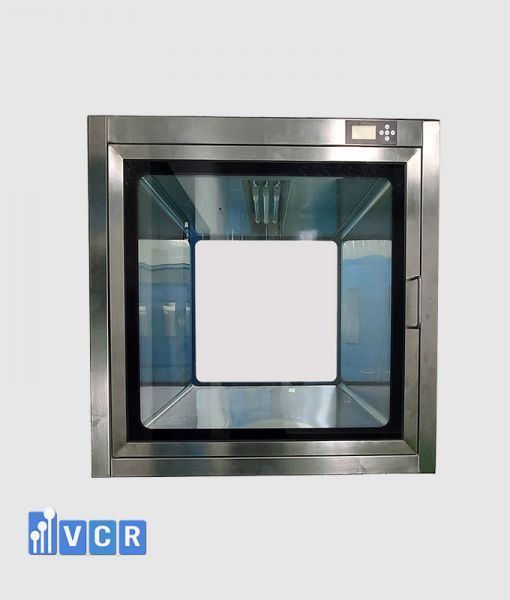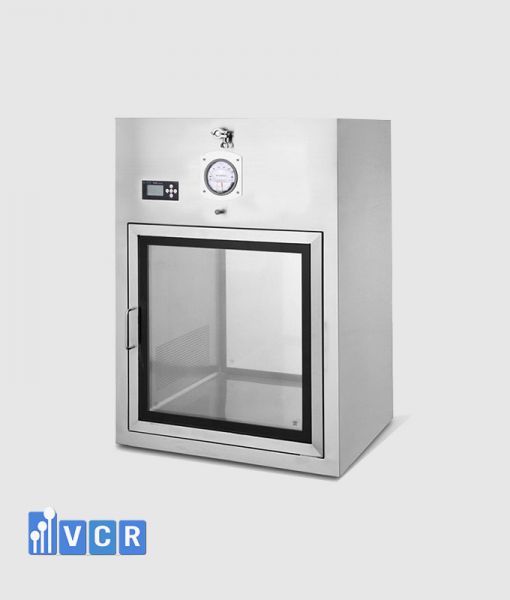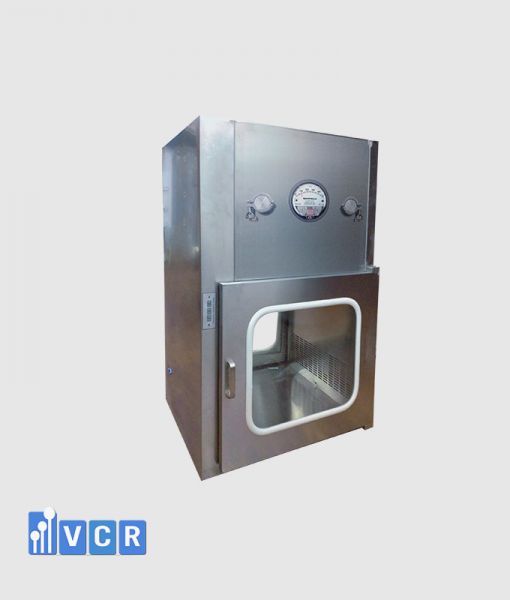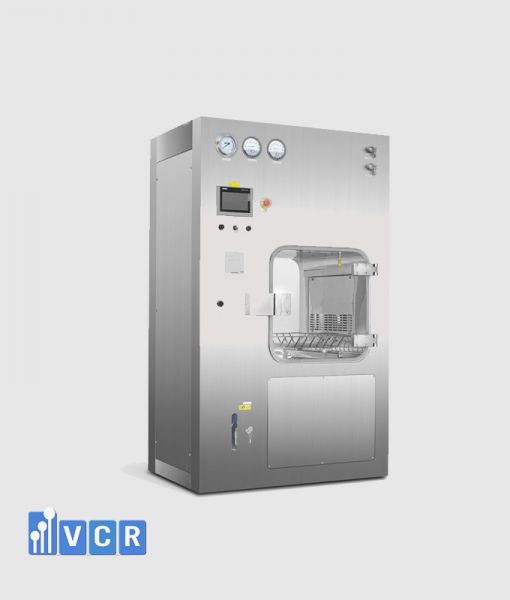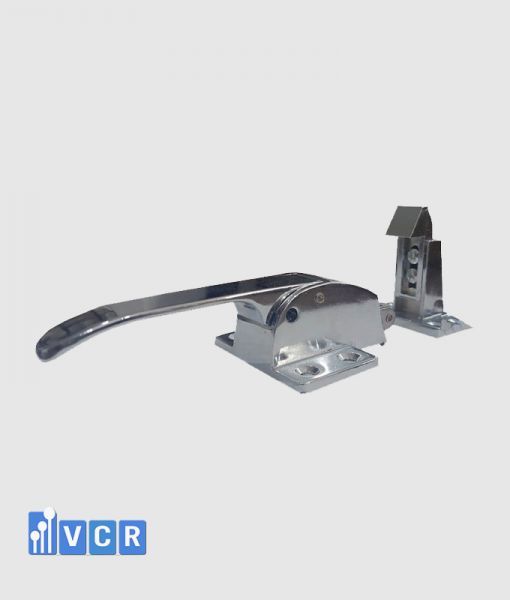

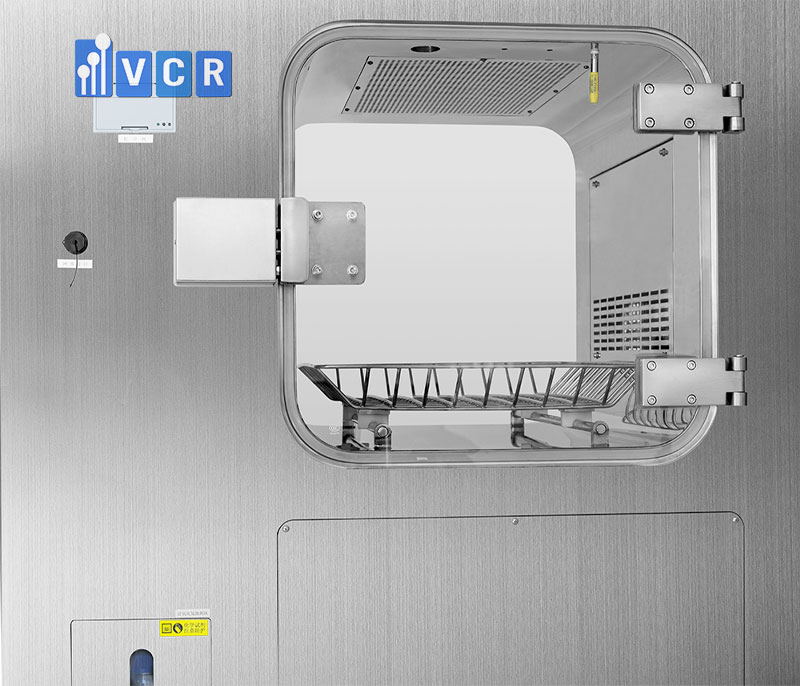
The LENGE VHP Pass Box uses vaporized hydrogen peroxide to decontaminate material surfaces during transfer between areas of different cleanliness classes. Designed for aseptic pharmaceutical facilities, it supports controlled transfer, 6-log efficacy, automatic operation, and GMP applications.
- What is a VHP Pass Box?
- Operating principle of a VHP Pass Box
- Why does a VHP Pass Box require an air-tightness test?
- Dehumidification before VHP injection
- How is hydrogen peroxide vaporized?
- How does VHP decontaminate material surfaces?
- Removal of residual VHP after decontamination
- VHP Pass Box cycle time
- Fully automatic operation
- 6-log decontamination efficacy
- Class B cleanliness
- LENGE VHP Pass Box models
- Corner VHP Pass Box for optimized facility layout
- Low hydrogen peroxide consumption
- LENGE VHP technology
- How is a VHP Pass Box different from a conventional Pass Box?
- Applications of VHP Pass Boxes in pharmaceutical facilities
- Key parameters to consider when selecting a VHP Pass Box
- Overall assessment of the LENGE VHP Pass Box
- About LENGE Cleanroom Equipment
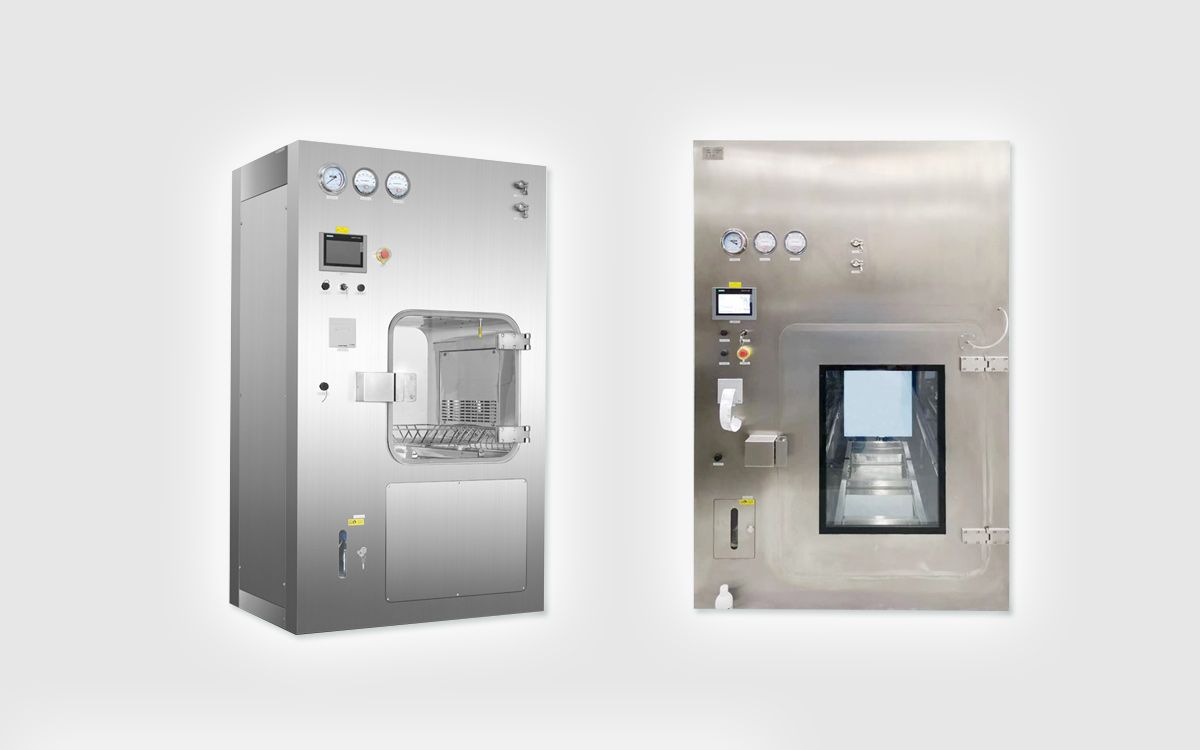
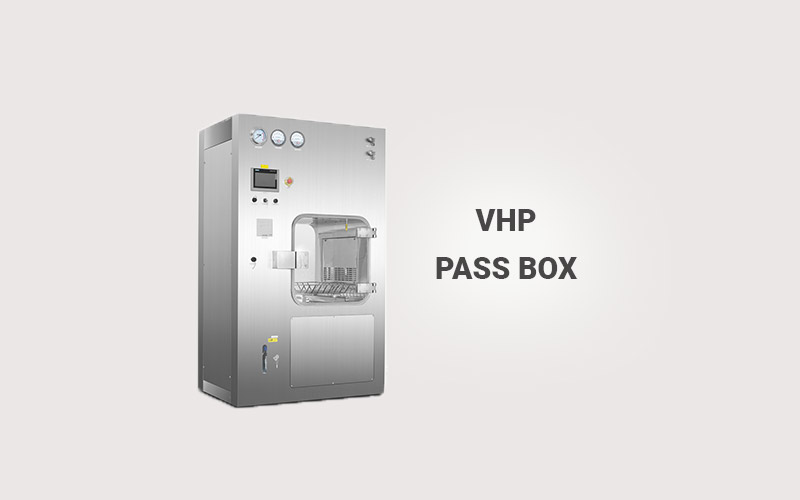
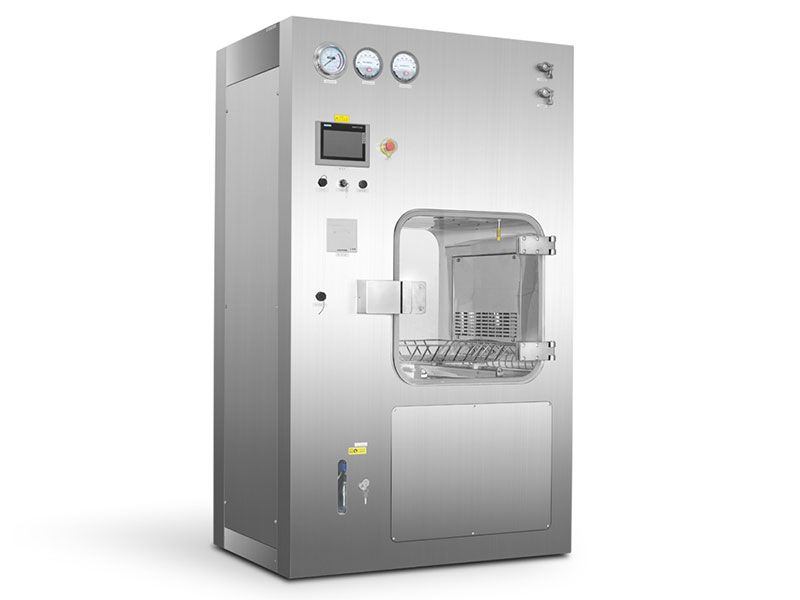
A VHP Pass Box is a transfer device used between areas with different cleanliness classifications while simultaneously performing surface decontamination using Vaporized Hydrogen Peroxide (VHP). It is particularly suitable for items that cannot be treated in an autoclave but are compatible with hydrogen peroxide in the vapor phase. According to LENGE documentation, the VHP Pass Box is designed for aseptic pharmaceutical manufacturing environments operating under GMP requirements.
What is a VHP Pass Box?
A VHP Pass Box can be understood as a Pass Box integrated with a VHP generation and control system that decontaminates the external surfaces of materials before they are transferred from a lower-classified area to a higher-classified area.
Unlike a conventional Pass Box, which mainly provides an intermediate transfer chamber and minimizes direct air exchange between two rooms, a VHP Pass Box adds an important function: surface decontamination of materials inside the transfer chamber.
This is particularly important in aseptic pharmaceutical facilities, where packaging, tools, raw materials, or auxiliary items may need to be transferred from a non-sterile area into a more highly controlled environment without compromising the conditions of the receiving area.
According to the LENGE catalogue, the equipment is designed to transfer products between two areas with different cleanliness classifications, such as from a non-sterile area to a sterile area, while minimizing disruption to the pressure balance between the respective zones.
Operating principle of a VHP Pass Box
At the center of the system is an integrated VHP generator.
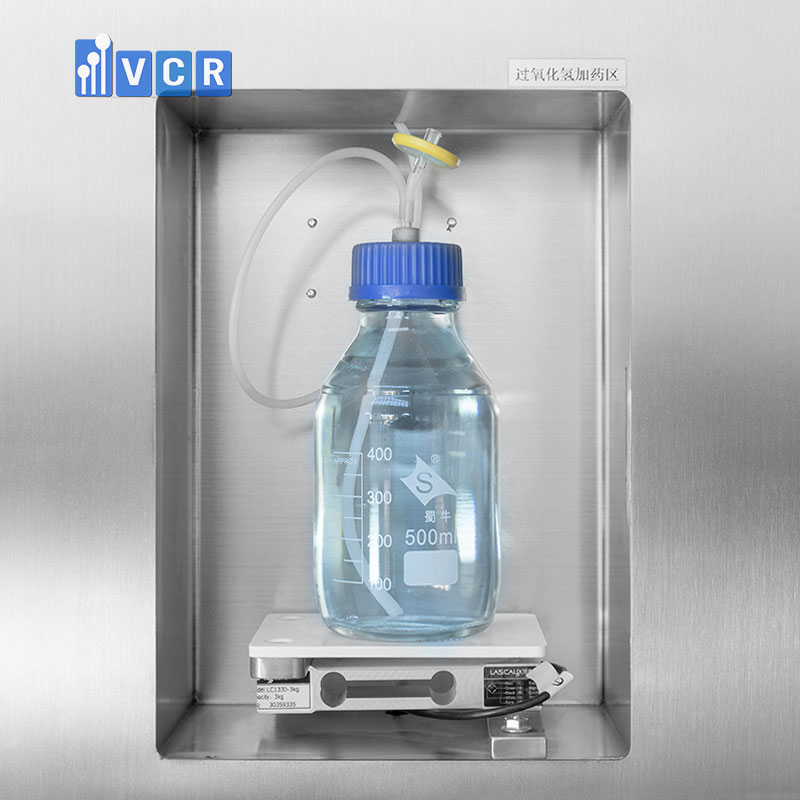
Liquid hydrogen peroxide is introduced into the vaporizer and heated until it is converted into vapor. The resulting VHP is then delivered into the Pass Box chamber, creating an environment capable of inactivating bacteria, viruses, and fungi on the surfaces of transferred items.
According to the LENGE catalogue, the entire process is program-controlled to maintain stable operating conditions throughout each stage of the cycle.
A VHP cycle involves more than simply introducing hydrogen peroxide into the chamber. The process is organized in the following sequence:
Air-tightness test → Dehumidification → H₂O₂ vaporization and decontamination → Residual VHP removal → End of cycle.
This sequence demonstrates that VHP Pass Box performance depends on controlling the chamber conditions before VHP injection, during the decontamination phase, and during the removal of residual hydrogen peroxide after treatment.
Why does a VHP Pass Box require an air-tightness test?
Air-tightness testing is the first stage of the operating sequence specified by LENGE.
This is important because VHP must be maintained inside the chamber under controlled conditions. If the doors, seals, or chamber construction are not sufficiently airtight, hydrogen peroxide vapor may leak outside, while the required concentration inside the chamber may not be maintained.
Therefore, chamber tightness is related not only to operational safety but also to the ability of the equipment to perform a stable and controlled decontamination cycle.
Dehumidification before VHP injection
After the air-tightness test, the system proceeds to the dehumidification stage.
According to the LENGE process diagram, this step is performed before hydrogen peroxide is vaporized and introduced into the chamber.
The inclusion of dehumidification as a separate stage indicates that the internal environmental conditions are prepared before VHP decontamination begins.
Because the process is automated, each stage can be executed according to a predefined sequence rather than relying entirely on manual operator intervention.
How is hydrogen peroxide vaporized?
The LENGE catalogue includes a schematic diagram of the VHP vaporization system.
The system consists of a liquid inlet, heating strip, temperature sensor, and an approximately 220 V power supply. Liquid hydrogen peroxide enters the vaporization unit, passes through the heating section, and is converted into vapor.
LENGE states that the equipment uses clean compressed air to support the vaporization process. According to the manufacturer, this helps reduce the impact on room pressure differentials that could otherwise occur when process air is drawn directly from the surrounding room.
This is particularly important for equipment installed between two cleanroom areas, where uncontrolled air intake or exhaust could affect the pressure balance of adjacent rooms.
How does VHP decontaminate material surfaces?
Once generated, VHP is introduced into the chamber containing the materials.
According to LENGE documentation, vaporized hydrogen peroxide creates an environment capable of inactivating bacteria, viruses, and fungi.
It is important to understand that the catalogue positions the equipment primarily for decontaminating the external surfaces of transferred items. This is an important distinction when comparing a VHP Pass Box with an autoclave.
A VHP Pass Box is suitable for items that cannot be treated in an autoclave but remain compatible with hydrogen peroxide in the vapor phase.
Therefore, when designing a material transfer process, the facility should evaluate the compatibility of product packaging, tools, components, and other materials with VHP before establishing the decontamination cycle.
Removal of residual VHP after decontamination
After hydrogen peroxide has completed the decontamination stage, the system must reduce the amount of residual VHP inside the chamber before the material transfer process can continue.
LENGE equips the system with a decomposition filter designed to reduce residual VHP concentration and minimize its impact on the environment and operating personnel.
According to the process sequence, the residual removal stage follows H₂O₂ vaporization and decontamination before the cycle ends.
This is an important part of VHP Pass Box operation because a complete cycle must not only achieve the required decontamination effect but also reduce residual hydrogen peroxide to the required operating condition before the door can be opened.
VHP Pass Box cycle time
According to the LENGE catalogue, the decontamination process takes less than 120 minutes.
The manufacturer states that this cycle time enables multiple decontamination operations to be performed within one day.
Cycle time is therefore an important parameter when selecting a VHP Pass Box because actual material transfer capacity depends not only on chamber dimensions but also on how long each cycle takes.
A larger chamber does not necessarily provide better throughput when relatively small items need to be transferred frequently. Conversely, a chamber that is too small may require an excessive number of cycles.
For this reason, model selection should consider both load volume and actual transfer frequency.
Fully automatic operation
One of the key features of the LENGE VHP Pass Box is its automatic operating capability.
According to the catalogue, operating menus or programs can be saved and recalled when required. The system is also equipped with an Emergency Stop function.
The ability to store programs helps reduce repetitive setup work for previously defined load types.
In pharmaceutical production, repeatability is particularly important because each transfer cycle should follow a defined process rather than varying according to individual operator practices.
6-log decontamination efficacy
In its technical specifications, LENGE states a Sterilization Efficacy of 6-log for this product range.
A 6-log reduction represents a logarithmic reduction in the microbial population under the established test conditions or validated cycle.
When a VHP Pass Box is implemented in a specific project, however, the cycle should still be evaluated and qualified using the actual load configuration. The size of the materials, loading arrangement, and exposed surfaces can all influence the effectiveness of the process and should therefore be considered during equipment qualification.
Class B cleanliness
The LENGE catalogue lists the VHP Pass Box with a Cleanliness Class B and a 6-log sterilization efficacy.
This specification indicates that the equipment is intended for pharmaceutical environments requiring a high level of contamination control.
However, the actual cleanliness classification and GMP compliance of the installed system should be assessed as part of the overall room design, the classification of the two connected areas, and the qualification process after installation.
LENGE VHP Pass Box models
LENGE offers several models to accommodate different material dimensions and transfer capacities.
LATM288 has an external dimension of 1200 × 800 × 2000 mm, an internal chamber dimension of 600 × 800 × 600 mm, and a nominal volume of 288 liters.
LATM512 has an external dimension of 1400 × 800 × 2200 mm, an internal chamber dimension of 800 × 800 × 800 mm, and a nominal volume of 512 liters.
LATM1000 has an external dimension of 1600 × 1060 × 2100 mm, an internal chamber dimension of 1000 × 1000 × 1000 mm, and a nominal volume of 1,000 liters.
LATM1440 has an external dimension of 1600 × 1260 × 2300 mm, an internal chamber dimension of 1000 × 1200 × 1200 mm, and a nominal volume of 1,440 liters.
The available capacity range from 288 to 1,440 liters allows facilities to select a model based on load dimensions, the number of items per cycle, and required operating throughput.
Corner VHP Pass Box for optimized facility layout
Another notable option in the catalogue is the Corner Sterilization Pass Box.
According to LENGE, this configuration is designed to improve factory space utilization and provide greater flexibility in equipment layout.
In actual cleanroom design, the two areas requiring material transfer cannot always be arranged directly opposite one another.
A corner VHP Pass Box therefore provides an additional solution for facilities with limited space or specific material-flow requirements.
Low hydrogen peroxide consumption
LENGE also highlights the system's very low hydrogen peroxide consumption.
This is an important consideration when evaluating the long-term operating cost of a VHP Pass Box.
In addition to the initial equipment investment, pharmaceutical facilities should consider hydrogen peroxide consumption, filter replacement, maintenance, periodic testing, and cycle duration when comparing different VHP Pass Box solutions.
LENGE VHP technology
The catalogue lists several patents directly related to the VHP system.
These include an invention patent for a Heating Device for VHP, Patent No. 201910097348.X, and a utility model patent for a VHP heating device, Patent No. ZL 201920172562.2.
LENGE also lists a VHP Device with Sterilized HEPA Filter, Patent No. 201922435716.5, together with a catalytic decomposition filter paper and filter technology for VHP decontamination equipment, Patent No. 201910880516.2.
These patents indicate that the manufacturer has developed specific technologies related to VHP heating, HEPA filtration, and catalytic decomposition of residual hydrogen peroxide.
How is a VHP Pass Box different from a conventional Pass Box?
The fundamental difference lies in how transferred materials are treated.
A conventional Pass Box mainly provides an intermediate space between two rooms to minimize direct opening and air exchange between the areas. A VHP Pass Box adds an additional process by performing surface decontamination with vaporized hydrogen peroxide before the materials are transferred to the next area.
According to LENGE documentation, the equipment is specifically designed for transferring products from a lower-classified area to a higher-classified area, particularly from a non-sterile area to a sterile area.
Therefore, a VHP Pass Box should not simply be regarded as a Dynamic Pass Box fitted with an additional VHP generator. The chamber construction, air tightness, dehumidification, vaporization, decontamination, and residual VHP removal stages must operate together as an integrated cycle.
Applications of VHP Pass Boxes in pharmaceutical facilities
VHP Pass Boxes are particularly suitable for aseptic pharmaceutical manufacturing facilities operating under GMP requirements. This is also one of the main applications specifically identified by LENGE in its catalogue.
The equipment can be installed along a material transfer route between an area with a lower level of environmental control and an area with a higher classification.
Instead of simply transferring materials through an intermediate chamber, the VHP Pass Box adds a surface decontamination stage before the clean-side door is opened.
For materials that cannot withstand autoclaving, a VHP Pass Box can be considered where the materials themselves are compatible with vaporized hydrogen peroxide.
Key parameters to consider when selecting a VHP Pass Box
A VHP Pass Box should not be selected based solely on chamber dimensions.
Facilities should evaluate the size and quantity of materials per batch, cycle duration, material compatibility with VHP, required cleanliness classification, required decontamination performance, residual hydrogen peroxide removal method, and the position of the equipment within the facility's material-flow strategy.
For the LENGE product range described in the catalogue, the stated decontamination cycle is less than 120 minutes, sterilization efficacy is 6-log, nominal chamber volume ranges from 288 to 1,440 liters, and the system includes automatic operation, program storage, emergency stop, and a residual VHP decomposition filter.
These specifications should always be considered in the context of the actual manufacturing process when selecting the appropriate configuration.
Overall assessment of the LENGE VHP Pass Box
The LENGE VHP Pass Box is a material transfer device that combines physical transfer with surface decontamination using vaporized hydrogen peroxide and is intended for applications between areas with different levels of environmental control.
One of the notable characteristics of the system is its complete process sequence, including air-tightness testing, dehumidification, H₂O₂ vaporization, decontamination, residual VHP removal, and cycle completion. The equipment incorporates an integrated VHP generator, clean compressed air, a decomposition filter, and automatic control.
With models ranging from 288 to 1,440 liters, a stated 6-log sterilization efficacy, and an intended application in aseptic pharmaceutical production, the LENGE VHP Pass Box is suitable for projects requiring controlled transfer of materials from lower-classified areas to higher-classified or sterile areas.
Vietnam Cleanroom Equipment – VCR Cleanroom supplies and provides technical consultation for VHP Pass Boxes for cleanroom contractors and pharmaceutical manufacturing facilities. Equipment configurations can be selected according to material dimensions, transfer capacity, cleanliness classification, installation location, and the specific decontamination requirements of each project.
About LENGE Cleanroom Equipment
LENGE Purification is a Chinese high-tech company specializing in the research, development, manufacturing, and supply of cleanroom equipment and solutions. Established in 1998, LENGE has developed a product ecosystem covering cleanroom equipment, pleated filter cartridges, air filters, and supporting equipment for various industries, with pharmaceutical manufacturing as one of its key focus areas.
To bring LENGE's specialized cleanroom solutions closer to the Vietnamese market, Vietnam Cleanroom Equipment – VCR Cleanroom established a partnership with WUXI LENGE PURIFICATION EQUIPMENTS. The two companies signed an exclusive distribution cooperation agreement for LENGE cleanroom equipment in Vietnam. VCR distributes LENGE products through its sales network in Vietnam, serving cleanroom contractors and pharmaceutical manufacturers implementing requirements such as EU GMP and WHO GMP.
Some Reference Documents
EAC Declaration of Conformity – EAC conformity declaration for LENGE Air Filter, Model AF
Certificate of Conformity – CE technical file conformity assessment for LENGE VHP Pass Box
LENGE VHP Pass Box Catalogue – Technical Specifications and Operating Principle
DAP